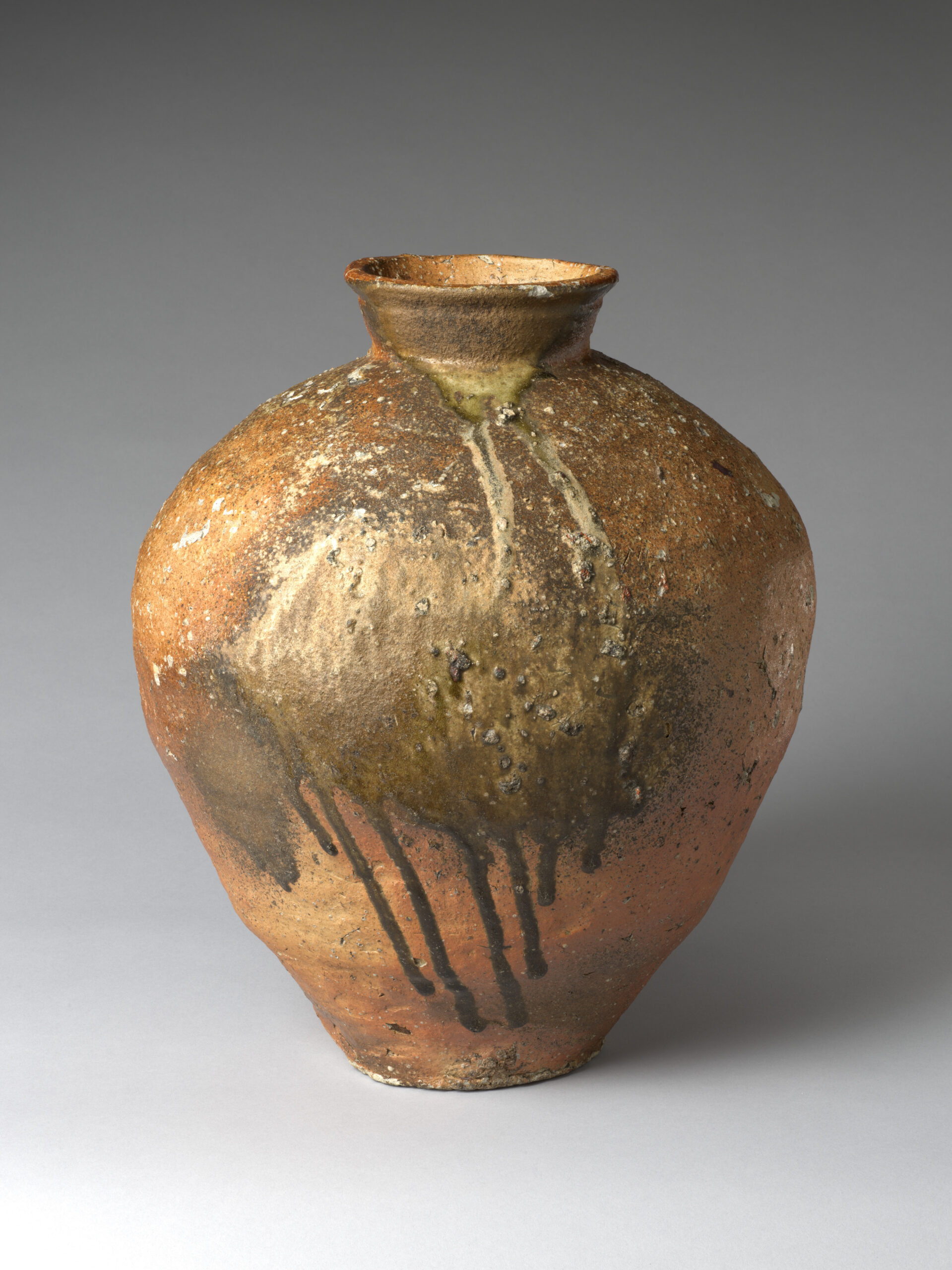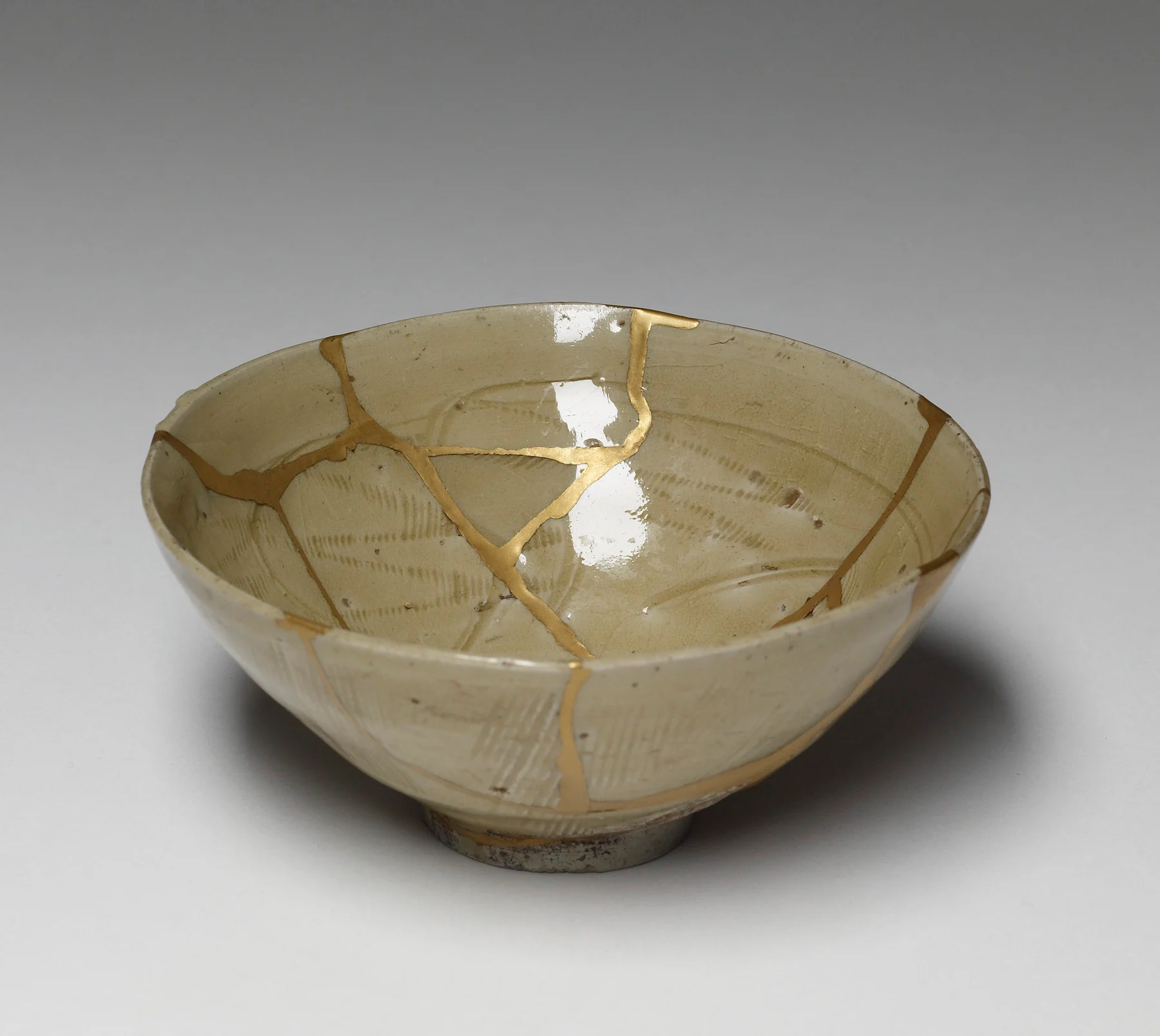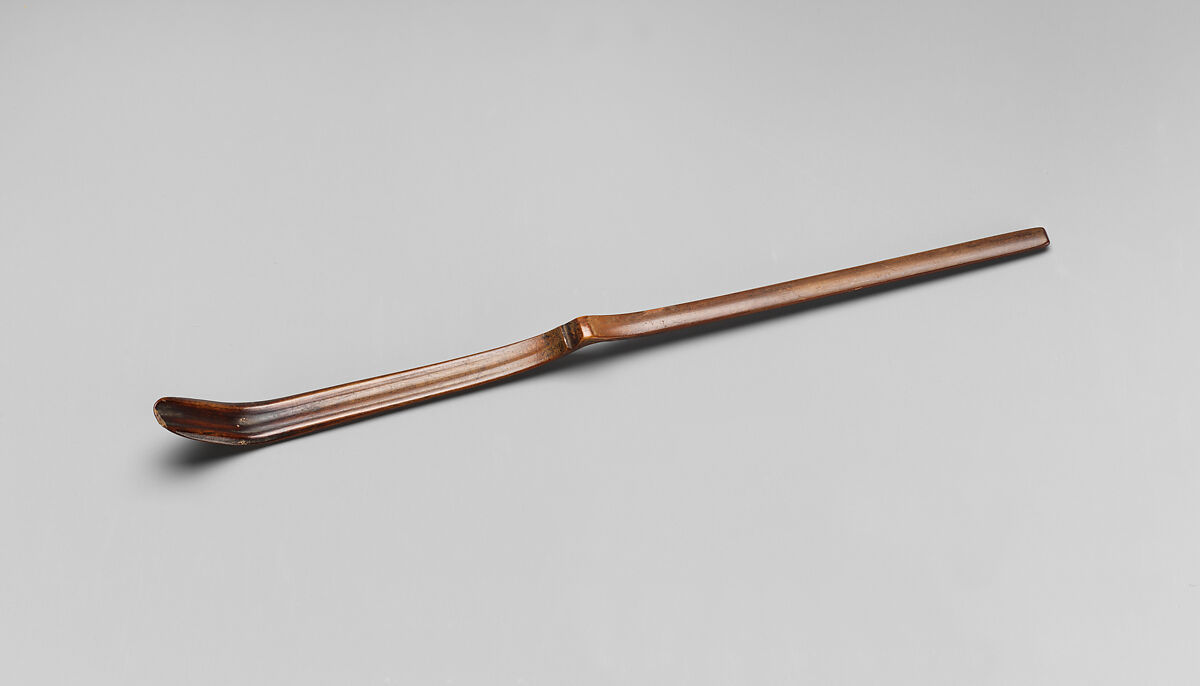
Somewhere between a yoga studio’s candle display and a home decor blog’s list of “wabi-sabi living room ideas,” the term has come to mean something close to “rustic and a little imperfect, in a soothing way.” That’s not wrong, exactly. It’s just a thin slice of a much older, much more specific idea — one that took shape over roughly a century of tea ceremony practice in medieval Japan, and that still shapes how a Bizen chawan or a crackled Hagi glaze is actually meant to be understood.
This guide traces wabi-sabi back to where it came from, and then back out again to what it actually means when you’re standing in front of a real piece of Japanese ceramics.
Two Words, Not One
Wabi-sabi is a compound of two originally separate ideas, and it helps to take them apart before putting them back together.
Wabi (侘) originally carried a fairly bleak meaning: the loneliness and material poverty of living apart from society, away from the comforts of court or city life. Over the medieval period, poets and, later, tea masters reworked that meaning into something closer to a virtue — the idea that freedom from material excess and emotional attachment could itself be a kind of richness. The Stanford Encyclopedia of Philosophy’s shorthand for wabi, “subdued, austere beauty,” captures where the word eventually landed: not sadness, but a deliberate, quiet restraint.
Sabi (寂) is closer to a physical, rather than emotional, idea: the beauty that age and use leave behind on an object or a place — a patina, a fading, a visible trace of time having passed. Where wabi describes a state of mind, sabi describes a state of surface. The two ideas are related but not identical, which is part of why collapsing them into a single buzzword loses something real.
How a Tea Ceremony Built a Philosophy
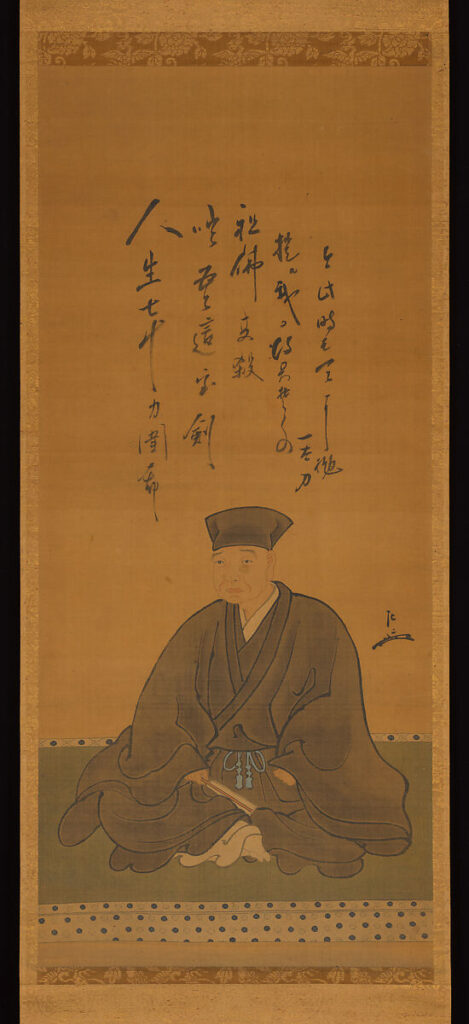
Wabi-sabi as an aesthetic didn’t emerge from poetry or painting first. It emerged from tea.
In the late fifteenth century, the tea master Murata Jukō (1423–1502) pushed back against the fashion of his time, in which wealthy patrons prized elaborate imported Chinese tea implements (karamono) as status objects. Jukō — who is also said to have trained in Zen under the monk Ikkyū Sōjun — began deliberately using humbler, “wabi” utensils instead, including unglazed Japanese stoneware from Shigaraki and Bizen that would have been considered unrefined by the standards of the day. This is usually treated as the founding gesture of wabi-cha, “wabi tea”: choosing modesty and material honesty over imported luxury, on purpose, as an aesthetic position rather than a compromise.
Takeno Jōō (1502–1555) carried the idea further, simplifying tea practice and its physical setting even more. It was Sen no Rikyū (1522–1591) — tea master to two of the most powerful men in Japan, Oda Nobunaga and Toyotomi Hideyoshi — who is generally credited with completing wabi-cha into something close to the form still practiced today: a small, unadorned tea room, deliberately humble utensils, and an aesthetic built around restraint rather than display. Rikyū’s own grandson, Sen Sōtan, pushed the philosophy even further, embracing it so completely that he earned the nickname “Beggar Sōtan” for how far he carried the ideal of material simplicity.
It’s worth noting what this history does not support: treating wabi-sabi as a vague, universal design mood applicable to anything rustic-looking. It emerged from a specific, documented rejection of ostentation by named historical figures working within a specific practice, not as a general aesthetic theory invented to describe imperfection in the abstract.
How the West Encountered the Idea
Wabi-sabi’s international fame is a comparatively recent development. D.T. Suzuki’s influential mid-twentieth-century writing on Zen Buddhism and Japanese culture introduced many of the underlying ideas to Western readers, though not always under the specific term “wabi-sabi” itself. The concept reached a much wider international audience in 1994, with Leonard Koren’s short book Wabi-Sabi for Artists, Designers, Poets, and Philosophers, which offered what’s become one of the most widely quoted working definitions: beauty that is imperfect, impermanent, and incomplete.
That definition is a genuinely useful compression of a complicated idea, but compression comes at a cost. Once “imperfect, impermanent, incomplete” circulates widely enough as a standalone phrase, it becomes easy to apply to almost anything slightly worn or asymmetrical — a manufactured distressed-finish table, a deliberately chipped-looking mass-produced mug — regardless of whether any of Rikyū’s actual concerns (restraint, honesty of material, freedom from ostentation) are present at all.
What Wabi-Sabi Actually Values
Stripped back to the tea room where it was formalized, wabi-sabi rewards a fairly specific set of qualities, and most of them show up directly in the ceramics traditions covered elsewhere on this site.
Transience treated as content, not flaw. A Hagi chawan’s kannyū — the fine glaze crackle that gradually darkens and shifts in color as tea and years pass through it — isn’t a defect being tolerated. It’s the entire point: a bowl that keeps changing is doing exactly what a wabi-sabi object is supposed to do.
Asymmetry that reads as honest rather than careless. A deliberately warped kutsu-gata (“shoe-shaped”) tea bowl, associated with the tea master Furuta Oribe, isn’t badly made. Its irregularity is a considered rejection of the mechanical perfection a wheel can easily produce, in favor of a form that keeps the eye moving rather than settling into a static, symmetrical read.
Naturalness that isn’t self-conscious. Bizen’s goma and hidasuki, the ash-fleck and fire-cord markings left by an unglazed firing, are valued precisely because no potter fully dictates them. The moment an effect starts to look engineered for dramatic impact rather than genuinely arising from clay and flame, it stops functioning the way wabi-sabi asks it to function.
Restraint over accumulation. This is the part most easily lost in translation. Wabi-sabi isn’t simply “more texture, more roughness, more visible age equals more authentic.” Rikyū’s tea room was famous for having almost nothing in it. The aesthetic is as much about what’s absent — decoration, ornament, display — as it is about what’s present.
What Wabi-Sabi Is Not
A few clarifications worth making directly, since they’re where the buzzword version of the concept tends to go wrong:
It is not simply “shabby chic,” a decorating style built around deliberately distressed or aged-looking new furniture. Manufactured imperfection, designed in advance to look like the accidental result of age, inverts the entire premise — wabi-sabi values what actually happened to an object over time, not a simulation of it.
It is not a synonym for “handmade” or “rustic” on their own. A crudely made object isn’t automatically wabi-sabi; the tradition assumes real skill and intention behind the restraint, the way Rikyū’s tea room was sparse by design, not by poverty of craft.
It is not, despite how often it’s used this way, simply “beauty in imperfection” as a complete definition. That phrase is a reasonable entry point, but it drops the specific historical content — tea ceremony, Zen influence, a documented rejection of ostentation — that gives the idea its actual shape.
A Practical Way to Look for It
When examining an actual piece, a few concrete questions do more work than the word “wabi-sabi” on its own:
Does an irregularity look like it arose from the process — a kiln’s ash fall, a kick wheel’s natural variation, clay shrinking unevenly during firing — or does it look deliberately staged for effect? Does the piece invite closer, quieter attention, or does it announce itself? Has time and use been allowed to show on the piece honestly, the way a Hagi bowl’s kannyū is expected to darken with years of tea, rather than concealed or artificially replicated? These questions translate a slippery aesthetic term into something you can actually check against an object in your hands.
Where This Leads Next
Wabi-sabi’s comfort with visible time and imperfection has one particularly direct descendant worth understanding on its own: the practice of repairing broken ceramics with lacquer and gold, rather than hiding the break or discarding the piece. That practice — kintsugi — takes wabi-sabi’s core idea and pushes it one step further, treating not just age but actual damage as something worth making visible rather than erasing.
Read next: What Is Kintsugi, Really? The Art of Repairing with Gold →https://hojoceramics.com/what-is-kintsugi-really-the-art-of-repairing-with-gold/
About HOJO Japanese Ceramics
HOJO Japanese Ceramics is based in Tobe Town, Ehime Prefecture, one of Japan’s historic pottery regions.
We research, curate, and share authentic Japanese ceramics with collectors around the world.
Explore our curated collection in the HOJO Etsy Shop.