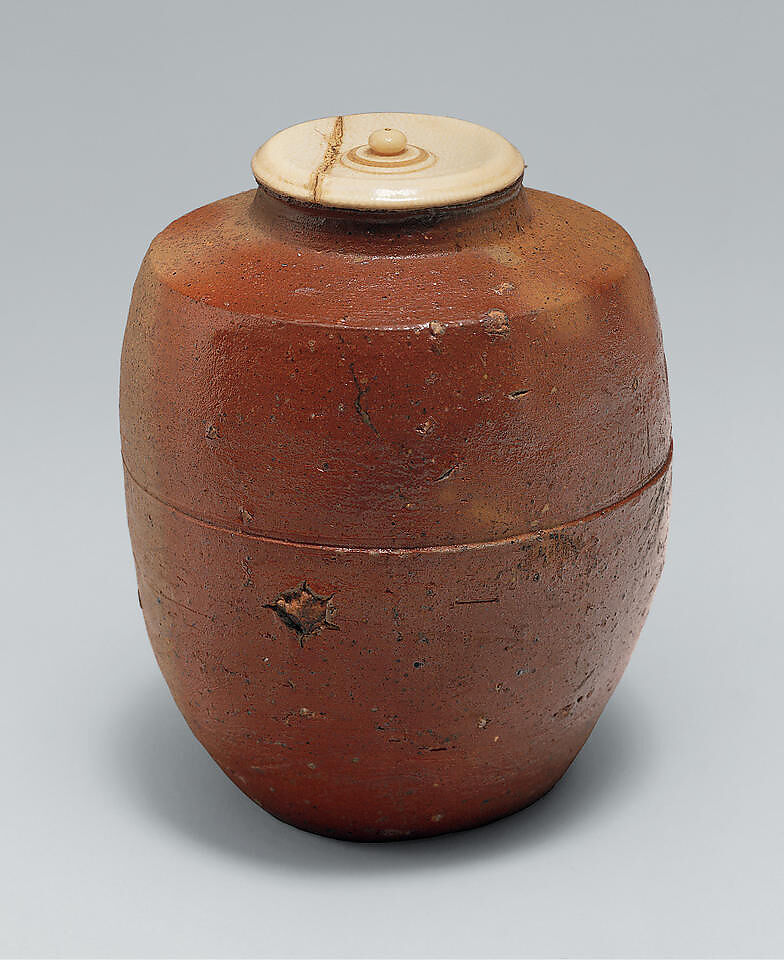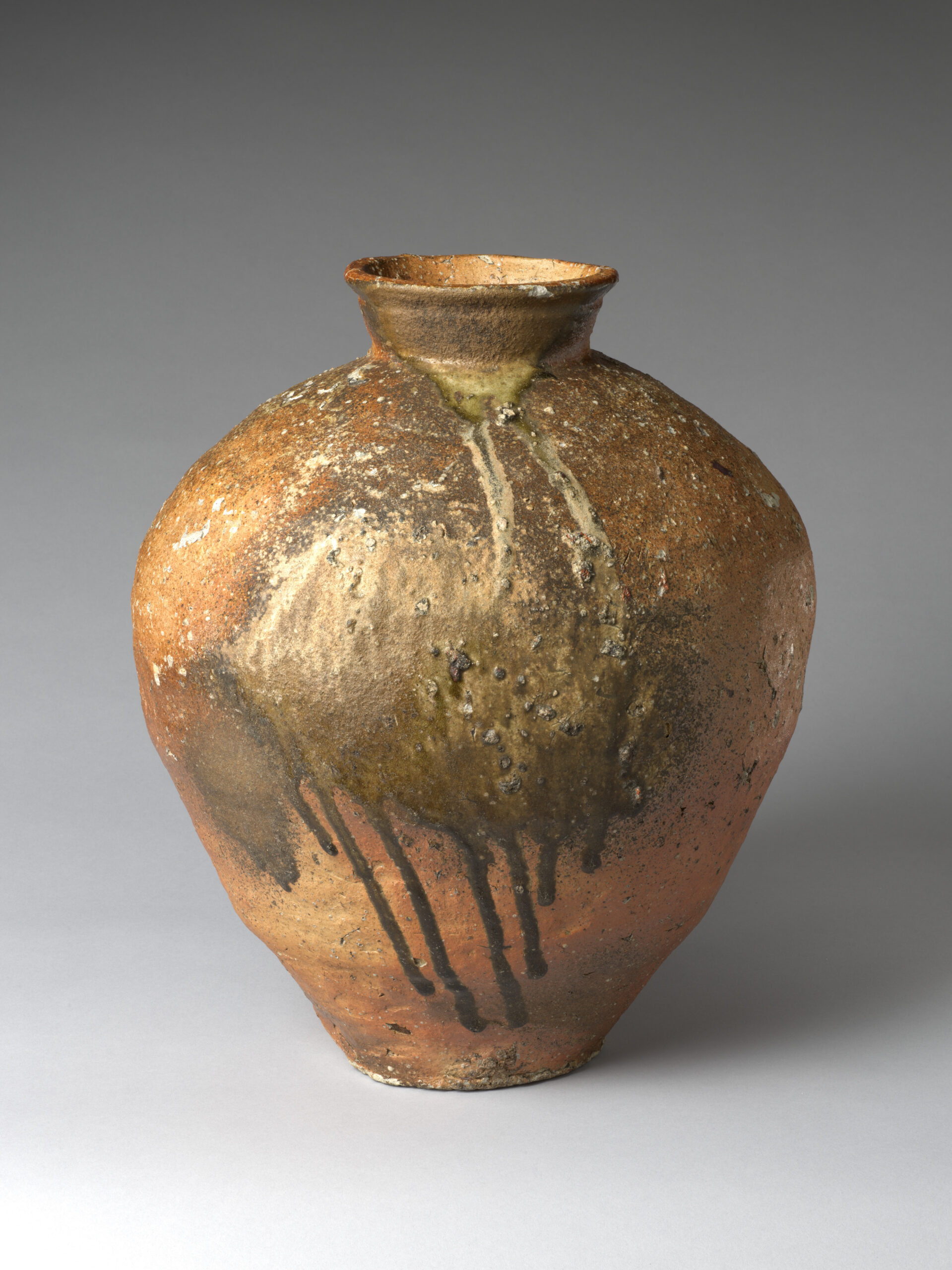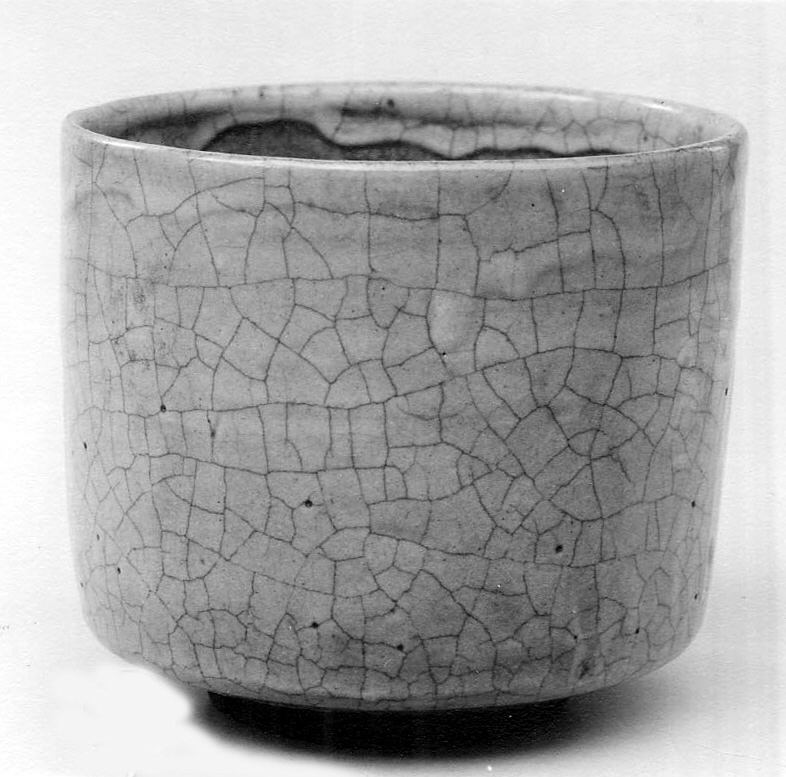
Every piece of Japanese pottery eventually forces a choice: cover the clay in glaze, or leave it bare and let fire alone decide what the surface will look like. That single decision — glaze or no glaze — is arguably the largest fork in the road running through everything covered so far in this series. A bowl’s shape and its kōdai tell you about the hand that made it; what happens next, in the glaze and the kiln, tells you about the place and the fire.
The Fundamental Split: Glazed and Unglazed
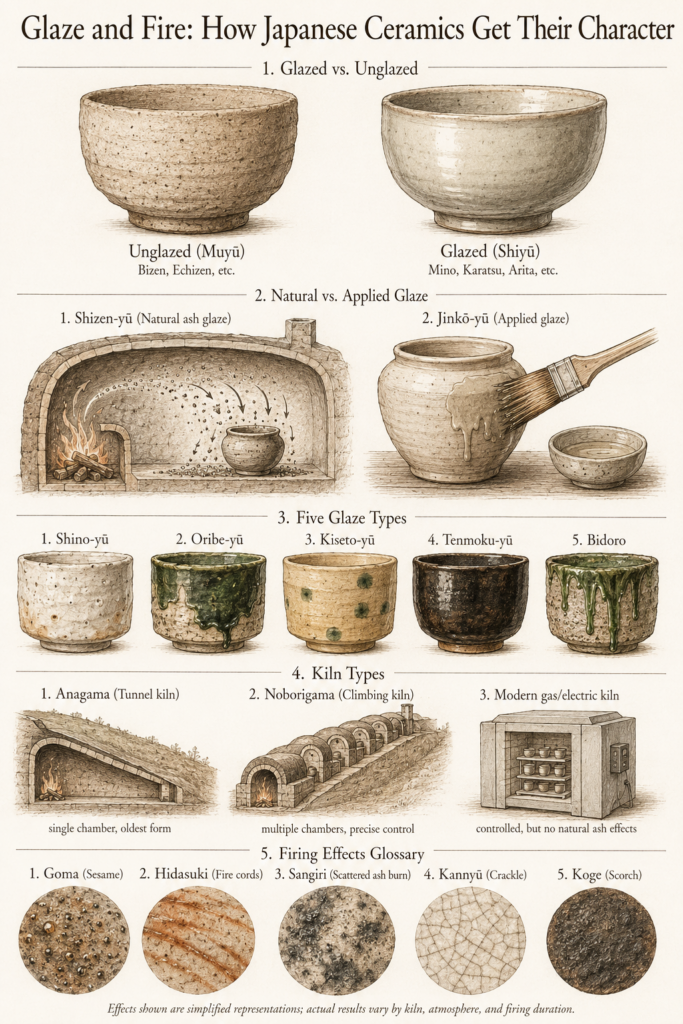
Some of Japan’s oldest and most admired traditions — Bizen, Echizen, and much of Tokoname and Shigaraki’s older work — use no glaze at all. Every visible effect on the surface comes from the clay’s own mineral content reacting with flame, ash, and atmosphere inside the kiln. Other traditions — Mino, Karatsu, Kutani, Arita — build their identity specifically around applied glaze, using it as a controlled, repeatable surface rather than leaving the outcome to chance.
Neither approach is more sophisticated than the other; they’re simply different bets about how much a potter wants to determine in advance versus hand over to the kiln. Unglazed ware asks the potter to master clay, form, and kiln placement, accepting that the final surface will still contain real uncertainty. Glazed ware asks the potter to master chemistry — which minerals produce which colors, how thickly to apply a given glaze, how the kiln atmosphere will shift its final appearance — in exchange for more predictable, repeatable results.
Natural Glaze Versus Applied Glaze
Even within “glazed” ware, there’s a further distinction worth knowing.
Shizen-yū (自然釉), natural ash glaze, isn’t applied by hand at all. During a long wood firing, airborne wood ash settles on a piece’s surface, and at high enough temperatures the ash itself melts into a thin, glass-like coating, fusing with the clay body beneath it. Where the ash lands thickest, or where flame passes most directly, the resulting glaze is thickest and most visually active; where it barely reaches, the clay stays close to its raw color. This is the mechanism behind most of what makes unglazed-looking ware like Bizen or Shigaraki visually complex despite using no applied glaze whatsoever — the ash itself functions as an accidental, unrepeatable glaze.
Jinkō-yū (人工釉), applied glaze, by contrast, is a deliberately mixed suspension of minerals in water, brushed, poured, or dipped onto a piece before firing. It gives a potter far more control over color and texture, though the kiln’s atmosphere (see below) still shifts the outcome in ways no potter fully dictates.
Five Glaze Types Worth Knowing
A handful of applied glazes recur often enough across the traditions in this guide that they’re worth learning by name.
Shino-yū (志野釉). A thick, milky-white feldspathic glaze developed by Seto potters who relocated to Mino in the late sixteenth century, made possible in part by the finer clay that became available once suihi purification techniques reached the region. Shino glaze is prized specifically for its imperfections: small pinholes where gas escaped during firing, and a soft, uneven crawl across the surface that keeps the white from ever looking uniform.
Oribe-yū (織部釉). A bold copper-based glaze that fires bright green in an oxidizing kiln atmosphere and, less commonly, red in a reducing one. Also developed by Seto potters working in Mino, in the early seventeenth century, and named for the tea master Furuta Oribe, whose documented taste for asymmetry and visual boldness the glaze is closely associated with.
Kiseto-yū (黄瀬戸釉). A pale yellow-brown glaze colored by only a trace amount of iron, developed slightly earlier than Oribe by the same generation of Seto-to-Mino potters. Kiseto pieces are often accented with small dabs of green from tanpan (copper sulfate), giving an otherwise quiet glaze a few deliberate points of color.
Tenmoku-yū (天目釉). An iron-based glaze family ranging from yellow-brown to near-black depending on iron concentration, named after Mount Tianmu in China, where Japanese Zen monks first encountered the Chinese bowls that introduced this glaze style to Japan. Old Seto ware’s earliest glazed pieces, dating to the late Kamakura period, were iron glazes in this same family, making tenmoku-type glazes among the oldest applied glazes used in Japan. Seto-guro, the near-black glaze pulled hot from the kiln to fix its dark color, belongs to this same iron-glaze family.
Bidoro (ビードロ), glass-glaze. Not a single formulated glaze but a natural ash-glaze effect, most associated with Iga and Shigaraki, in which heavy ash accumulation melts into thick, glassy green pools that visibly run and pool down a piece’s surface. The name derives from vidro, the Portuguese word for glass, reflecting the vocabulary Portuguese traders left in Japanese well beyond ceramics.
Kiln Types
What a kiln looks like, and how it’s fired, shapes the final result as much as the clay or glaze does.
Anagama (穴窯), the tunnel kiln. The oldest kiln form used in Japan, essentially a single sloped tunnel dug into a hillside, fired with wood from one end. Heat and ash travel the length of the tunnel, so pieces closer to the firebox typically show heavier ash accumulation and more dramatic effects than those placed further along. Firing an anagama is a multi-day, sometimes multi-week commitment, since temperature has to be built and sustained gradually across a single long chamber.
Noborigama (登窯), the climbing kiln. A more advanced design, made up of multiple connected chambers built in a rising line up a slope, so that heat and flame from a lower chamber pass upward into the next before escaping. This design allows considerably more precise, controllable firing than a single-chamber anagama, since each chamber can be managed somewhat independently. The noborigama is generally understood to have reached Japan with Korean potters brought over following Toyotomi Hideyoshi’s Korean campaigns of the 1590s, and its introduction is closely tied to the same wave of technical knowledge that brought suihi clay purification to Karatsu and, later, Mino.
Modern gas and electric kilns. Contemporary workshops, including many producing traditional-style ware today, often use gas or electric kilns for at least some of their output. These offer precise, repeatable temperature control and none of the multi-day commitment a wood kiln demands, but they also can’t replicate the specific, ash-driven surface effects that define traditions like Bizen or Shigaraki — which is exactly why wood firing persists in those traditions despite being slower and far less predictable.
A Glossary of Firing Effects
These are the specific, named results of natural ash glaze and kiln atmosphere that collectors learn to identify on sight — several of which were introduced in earlier regional guides in this project and are gathered here together for reference.
Goma (胡麻), “sesame.” Small, glassy specks where individual grains of ash melt directly onto the surface without spreading, resembling scattered sesame seeds. Most associated with Bizen.
Hidasuki (緋襷), “fire cords.” Reddish-orange linear marks left where straw was wrapped around a piece before firing; the straw itself burns away, but the sodium it contains reacts with the clay’s iron exactly where it made contact, leaving a permanent trace. Also most associated with Bizen.
Sangiri (桟切り), “scattered ash burn.” Grey-to-black patches, sometimes with a faint metallic sheen, caused by localized reduction (oxygen-starved) conditions where ash, embers, or other pieces block direct airflow during firing. Distinct from goma and hidasuki in being a matter of atmosphere rather than surface deposit.
Kannyū (貫入), crackle. A network of fine cracks running through a glaze’s surface, caused by a slight mismatch between how much the glaze and the clay body beneath it each shrink while cooling. Most closely associated with Hagi ware, where kannyū gradually absorbs tea and moisture over years of use, slowly shifting the bowl’s color and surface character.
Koge (焦げ), “scorch.” A dark, matte, sometimes crusty patch where ash accumulation was heaviest or flame contact most direct and prolonged, distinct from the more glassy pooling of bidoro. Common wherever unglazed ware sits closest to the firebox in a wood kiln.
Why the Unplanned Part Is the Point
None of the effects above are things a potter fully controls. A piece can be positioned thoughtfully in a kiln, wrapped with straw in a considered pattern, given a glaze mixed with real chemical understanding — and the outcome can still surprise the person who made it. That’s not a limitation collectors are expected to overlook. It’s close to the entire reason unglazed, wood-fired traditions have held their place in Japanese ceramics for as long as they have.
This is the clearest place in the whole production process where HOJO’s founding idea — depth over decoration — actually shows up as a physical fact rather than a phrase. A goma fleck or a run of hidasuki isn’t a decorative choice applied to a finished object. It’s the direct, unrepeatable record of a specific firing, in a specific kiln, on a specific day — evidence, not embellishment. Reading it is less like appreciating a decorated surface and more like reading a fingerprint left by fire itself.
With shape, clay, glaze, and fire now each covered in their own right, the final guide in this series brings them back together — not as a technical glossary, but as the story of a single piece moving from raw earth to finished chawan.
Read the final guide in this series: From Earth to Teahouse — The Full Journey of a Japanese Ceramic →
About HOJO Japanese Ceramics
HOJO Japanese Ceramics is based in Tobe Town, Ehime Prefecture, one of Japan’s historic pottery regions.
We research, curate, and share authentic Japanese ceramics with collectors around the world.
Explore our curated collection in the HOJO Etsy Shop.