How to Choose Japanese Pottery
Sixteen regions and several centuries of technique can feel like a lot to hold in your head at once, especially before you’ve handled many pieces in person. In practice, most collectors narrow things down by starting with what they actually intend to use or display, and letting that decision guide everything else.
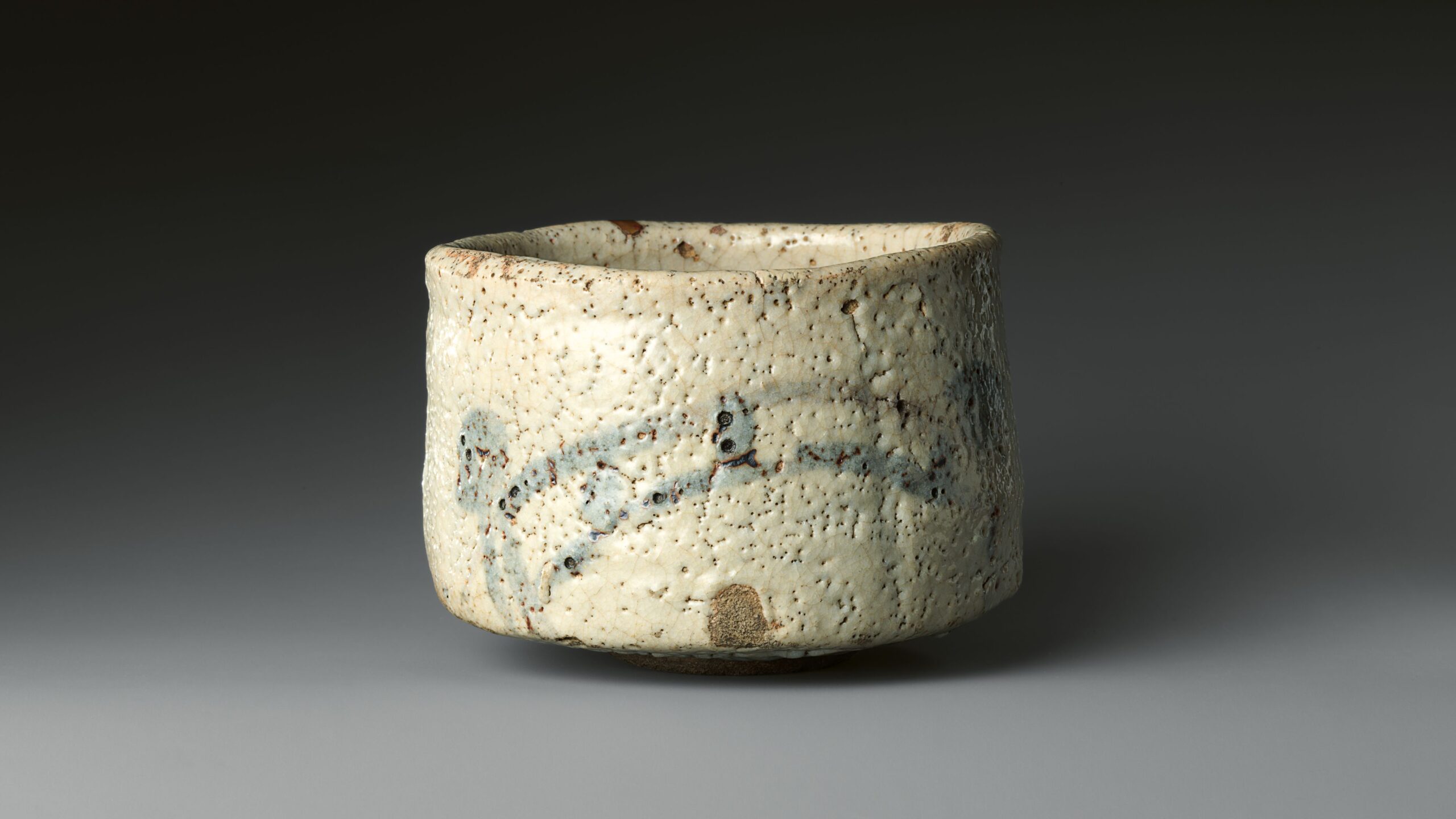
Chawan (tea bowls) are the most collected category, and for good reason: they carry more history, more regional variation, and more direct connection to the tea ceremony than almost any other form. A first chawan is often chosen less for investment value than for how it feels in the hands and how it performs with matcha — the shape of the rim against the lips, the weight when lifted, the way the glaze catches light while the bowl is turned to admire it, a step built into the tea ceremony itself. Hagi, Karatsu, Mino (Shino and Oribe), and Bizen are the traditional starting points for most new collectors, each offering a distinctly different relationship between hand, bowl, and tea.
Guinomi and sake vessels offer a lower-cost, lower-commitment entry into the same regional traditions. Because they’re smaller, potters often take more visible risks with glaze and form than they would on a larger commissioned piece, which makes guinomi a genuinely good way to sample a kiln’s range before committing to a chawan from the same maker.
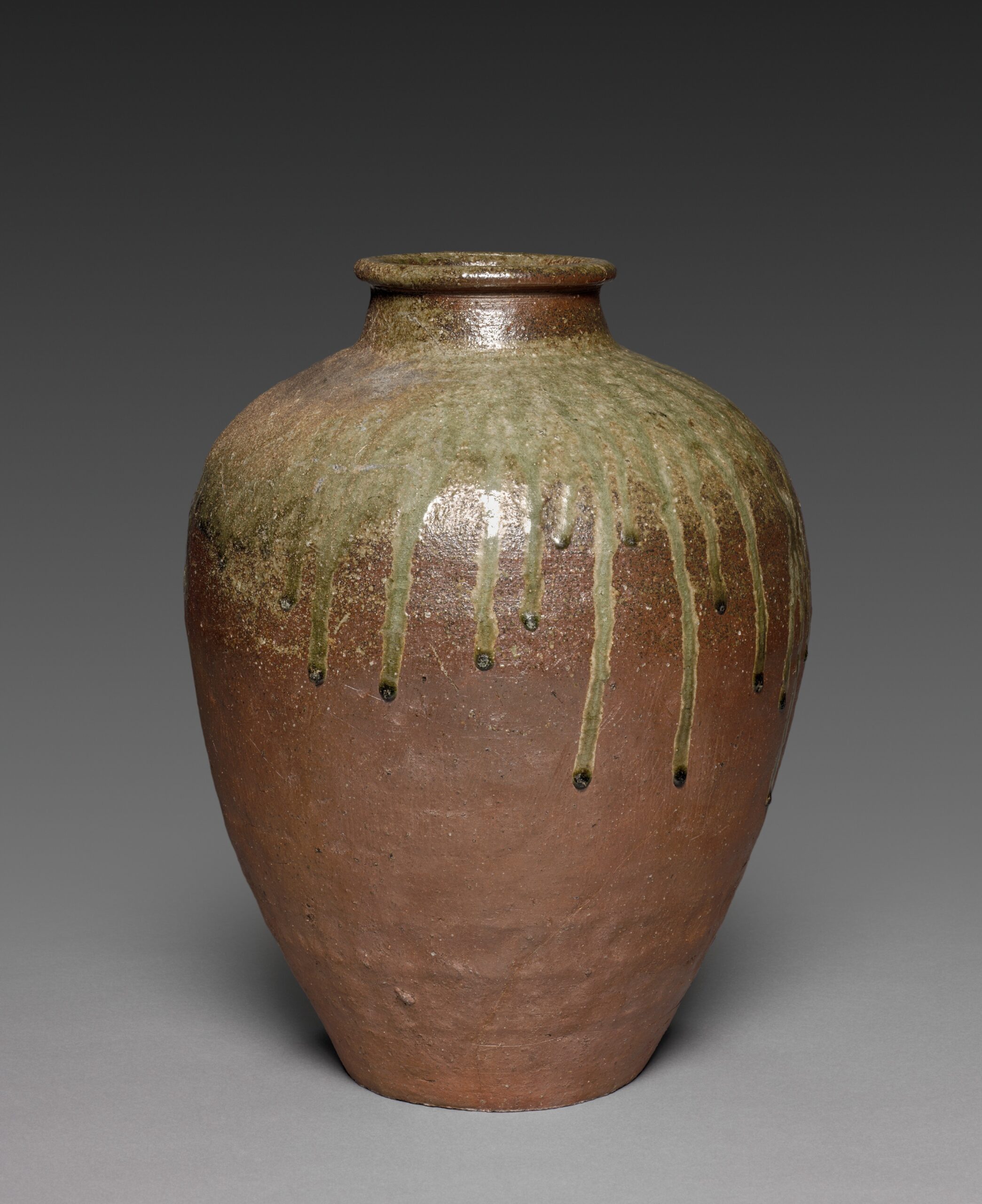
Flower vases (hanaire) were, like tea bowls, shaped directly by tea-ceremony taste — Iga’s dramatic ash-glaze effects and Shigaraki’s natural texture were both prized specifically for this use. A vase asks less of the owner than a chawan does (there’s no correct way to hold it, no ritual use to learn), which makes it a comfortable choice for someone drawn to the aesthetics of Japanese ceramics before they’ve developed a personal connection to tea.
Plates and tableware are the most functional category and, not coincidentally, the easiest to build a collection around without worrying about damaging something irreplaceable. Mino, Seto, and Tobe all developed strong traditions of everyday food ware, which makes them sensible starting points for anyone who wants to actually eat and drink from what they collect rather than display it behind glass.
Decorative and display pieces — vases, censers, figures — are where Arita, Kutani, and the export tradition of Satsuma tend to draw the most attention, since these traditions were built around painterly surface decoration rather than the restrained, unglazed aesthetics of Bizen or Echizen.
One piece of practical advice worth repeating: for beginners, choosing by region is usually easier than choosing by artist. An unfamiliar artist’s name tells a new collector almost nothing on its own — no sense of what to expect, no context for judging whether a price is fair. A region does. Once you know that Bizen means no glaze and Kutani means saturated overglaze color, every object from that region becomes legible before you’ve researched a single maker’s biography. Artist-level collecting is a natural next step, but it works best once regional literacy is already in place.
Frequently Asked Questions
What is the oldest pottery in Japan?
If the question means the oldest pottery ever made in Japan, the answer is Jōmon pottery, dating back over 10,000 years and among the oldest pottery traditions found anywhere in the world. If the question means the oldest regional trade tradition still in active production — which is usually what collectors are actually asking — the answer is one of the Six Ancient Kilns (Bizen, Shigaraki, Seto, Echizen, Tokoname, or Tamba), several of which trace continuous production back to the Heian and Kamakura periods, roughly the eighth through thirteenth centuries.
Which pottery is best for matcha?
There’s no single correct answer, but Raku, Hagi, and Karatsu are traditionally ranked as the three most prized ceramic traditions for tea (raku ichi, hagi ni, karatsu san), and Mino’s Shino and Oribe styles, along with Bizen, are close behind in most tea practitioners’ estimation. In practical terms, a good matcha bowl needs a wide enough mouth to allow whisking and a glaze or surface that won’t scratch a bamboo whisk (chasen) — most traditional chawan from these regions are designed with exactly that in mind.
What is the difference between Arita and Kutani?
Both are porcelain traditions from neighboring parts of Japan, but they read very differently. Arita ware tends toward precision: fine, controlled brushwork, often in cobalt blue underglaze or the more restrained Kakiemon and Nabeshima overglaze styles, with a strong documented export history to Europe. Kutani ware is bolder and more painterly, built around Kutani gosai, the five-color overglaze palette of red, yellow, green, purple, and Prussian blue, applied in dense patterns that read more like a small painting than a controlled decorative scheme. If Arita feels restrained, Kutani feels confident and saturated — a useful shorthand for telling the two apart at a glance.
What is the difference between Bizen and Shigaraki?
Both are unglazed, high-fired stoneware from Six Ancient Kiln traditions, and both rely on natural ash effects rather than applied glaze — which is why they’re often confused by newcomers. The clay is the clearest distinguishing feature: Bizen’s clay is fine and iron-rich, firing to deep reddish-brown tones with specific, named effects (goma, hidasuki, sangiri) that collectors learn to identify individually. Shigaraki’s clay is coarser, visibly flecked with feldspar and quartz, and tends to fire to warmer, more orange-scarlet tones with a rougher overall texture. Bizen also carries a more concentrated tea-ceremony pedigree, particularly through twentieth-century Living National Treasures; Shigaraki’s history runs more through utilitarian storage jars before tea culture adopted it.
Which Japanese pottery is best for beginners?
For learning to actually use and live with the ceramics, Tobe, Seto, and Mino are generally the most forgiving starting points — sturdy, reasonably priced, and made for daily use rather than display. For learning to look at Japanese ceramics — to start noticing ash effects, glaze behavior, and regional identity — Bizen and Shigaraki are unusually good teaching traditions, since so much of what defines them is visible on the surface without requiring specialist knowledge to appreciate.
Conclusion
Go back to that tea bowl from the opening of this guide, turning slowly in the light. By now, the uneven glaze and the drift of ash across one shoulder should read less like an accident and more like a signature — not of an individual maker, necessarily, but of a place: its clay, its kiln, its centuries of accumulated judgment about what counts as beautiful.
That’s the real takeaway from sixteen regions this different from one another. Japanese pottery isn’t one philosophy of beauty; it’s sixteen, arguing gently with each other across nearly a thousand years — Bizen’s refusal to add anything at all standing against Kutani’s confidence in saturated color, Tobe’s plain daily usefulness standing against Satsuma’s ornate export porcelain. None of them is more correct than the others. Each is simply what a particular place, working with what its clay and its history gave it, decided beauty should look like.
This guide is the map, not the destination. Each region here will eventually have its own dedicated guide going deeper into individual kilns, named potters, and specific pieces worth knowing — Bizen’s Living National Treasures, Hagi’s seven transformations, Arita’s export history to European courts. For now, the useful next step is simple: the next time a piece of Japanese pottery crosses your path, in a gallery, an auction listing, or your own collecting, see how much of it you can now read for yourself.
About HOJO Japanese Ceramics
HOJO Japanese Ceramics is based in Tobe Town, Ehime Prefecture, one of Japan’s historic pottery regions.
We research, curate, and share authentic Japanese ceramics with collectors around the world.
Explore our curated collection in the HOJO Etsy Shop.