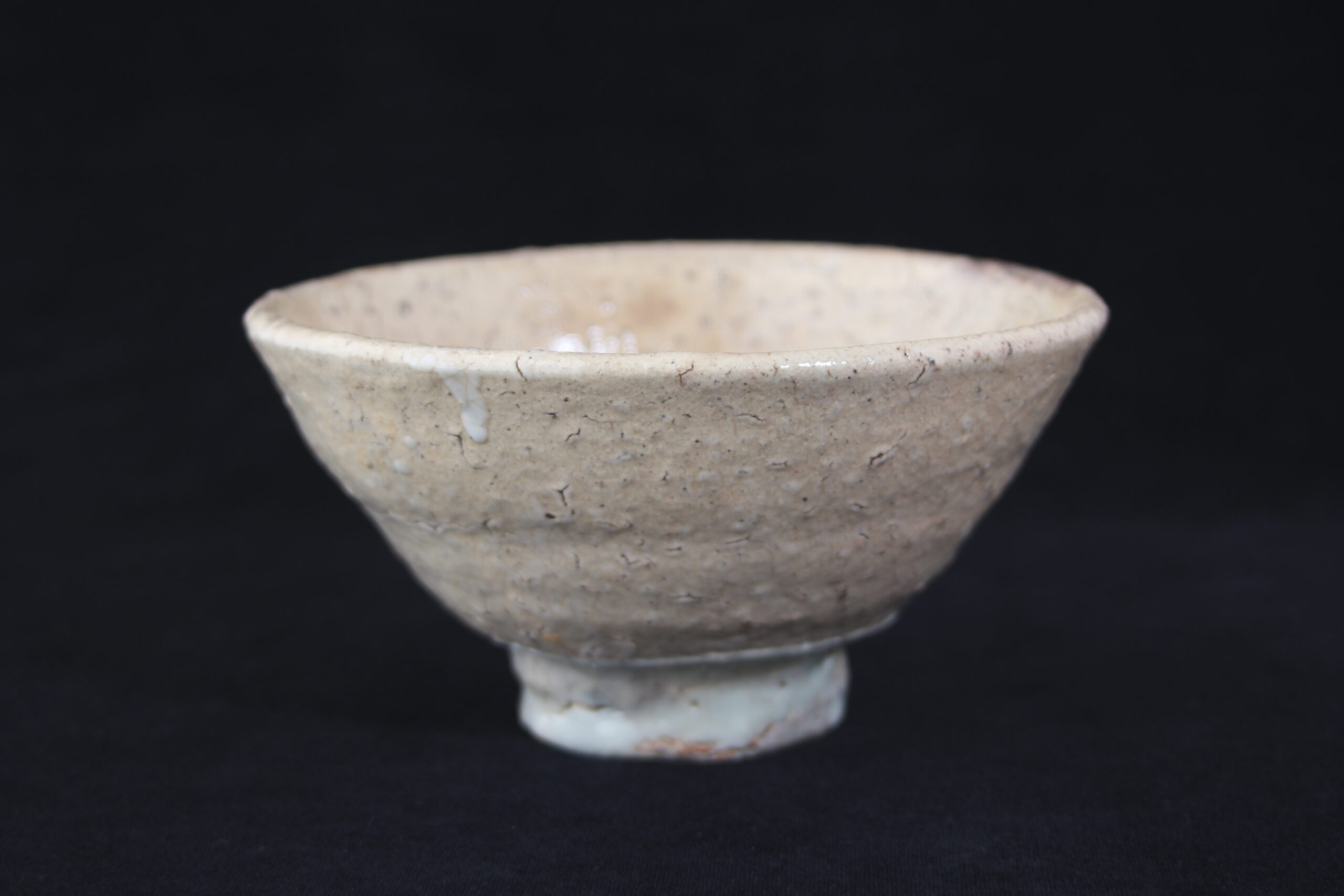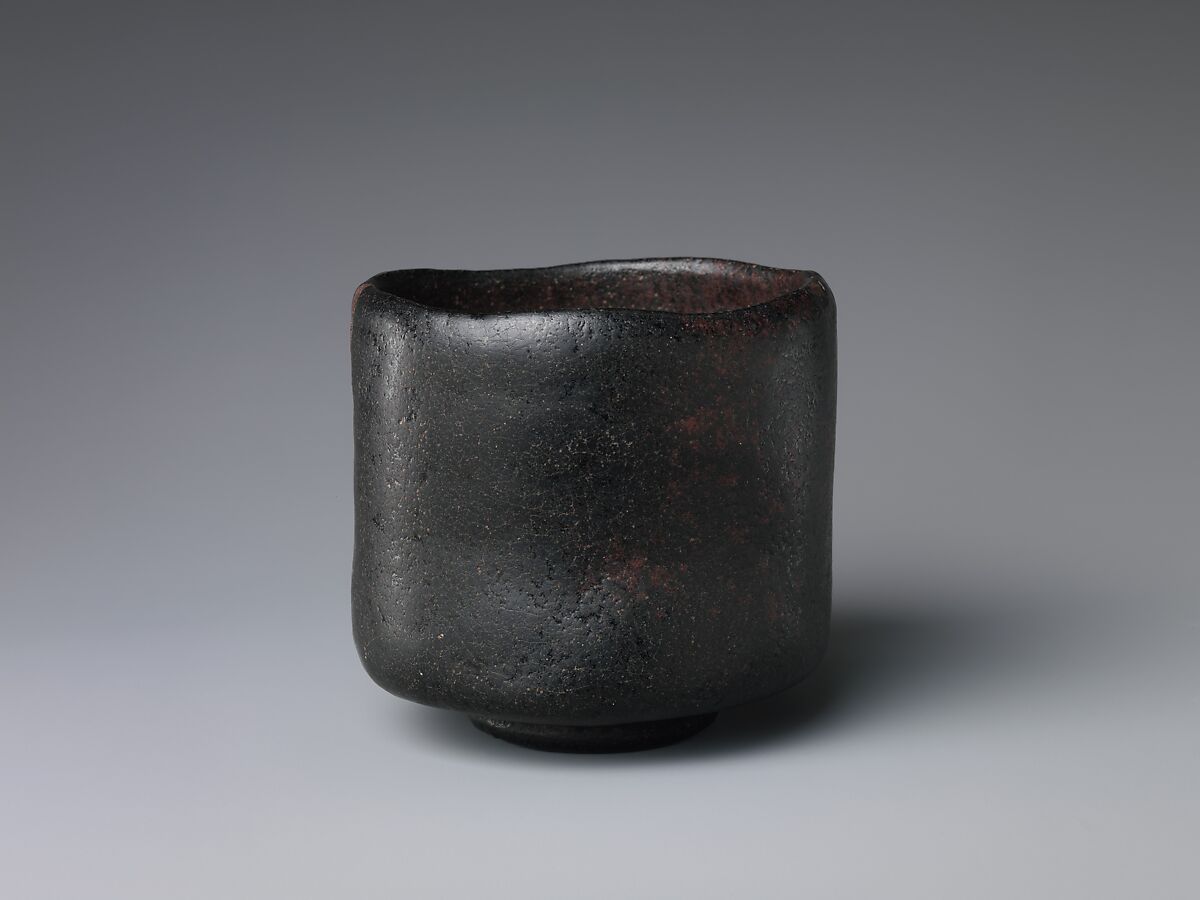
Every other tradition in this guide developed the way most craft traditions do: a region’s clay, a local kiln, generations of potters refining what worked. Raku ware didn’t happen that way. It was commissioned into existence by one man, for one specific purpose, by a potter who built it around a wheel he deliberately chose not to use. Four and a half centuries later, that same family is still making it, under the same name, using a technique that has barely changed. Very little else in Japanese ceramics has a founding story this specific — or a family line this unbroken.
- A Tea Bowl Designed on Purpose
- An Unbroken Line, Fifteen Generations Deep
- What Actually Makes Raku Different
- Two Colors, By Design
- Built for Tea, Down to the Millimeter
- Beyond the Kichizaemon Line
- “Raku” in the West: A Different Thing Wearing the Same Name
- A Collector’s Guide to Raku
- Why Raku Rewards Attention to Origin
- About HOJO Japanese Ceramic
A Tea Bowl Designed on Purpose
In the 1570s, Sen no Rikyū — the tea master whose taste would go on to define wabi-cha more than anyone else’s — was looking for something that didn’t yet exist. He wanted tea bowls suited to the small, deliberately cramped tea rooms he favored: bowls that felt as though they’d been shaped directly from mud by hand, with none of the polish of imported Chinese ceramics or the mechanical regularity of a wheel-thrown form. Through his senior disciple Tanaka Sōkei, Rikyū connected with a Kyoto craftsman named Chōjirō (d. 1589), who worked as a roof-tile maker and whose father, a potter known as Ameya, is generally thought to have come from Fujian, China, bringing techniques related to Ming-dynasty sansai (“three-color”) glazing with him.
Chōjirō’s qualifications for the job weren’t obvious on paper. His earliest surviving dated work, from 1574, is a bold two-color glazed lion sculpture — nothing like a tea bowl, but evidence of real sculptural confidence with glaze and form. Rikyū apparently saw something in that confidence that suited his purpose, and commissioned Chōjirō to develop an entirely new kind of tea bowl: hand-built rather than thrown, using clay reportedly excavated during construction of Toyotomi Hideyoshi’s Jurakudai palace, fired at low temperature, and finished in restrained, near-monochrome black or red rather than the colorful glazes Chōjirō’s own family background would have made natural.
The bowls that resulted had no real precedent. They weren’t everyday household ware, and they weren’t imported Chinese luxury ceramics — they were a tea bowl designed from first principles, for one purpose, by direct commission. Contemporaries initially called them imayaki (“now-ware,” or “contemporary ware”), and later Jurakuyaki, after the palace grounds their clay came from and near which both Chōjirō’s workshop and Rikyū’s own residence stood. The name eventually shortened to what we now call it: Rakuyaki, Raku ware — and tradition holds that Hideyoshi himself granted the family a seal bearing the character raku (楽, “comfort” or “ease”), which the family adopted as its name going forward.
An Unbroken Line, Fifteen Generations Deep
What happened after Chōjirō’s death in 1589 is where Raku ware becomes genuinely unusual among Japanese ceramic traditions: instead of splitting into competing lineages the way Hagi or Karatsu did, it has continued as a single hereditary family line, using the same workshop name — Raku Kichizaemon — down to the present day.
The second-generation head, Jōkei (常慶, 1561–1635), was the son of Tanaka Sōkei, the same disciple who had first connected Chōjirō with Rikyū — meaning the family that would carry the Raku name forward was, from the very beginning, bound up with Rikyū’s own circle. Jōkei introduced a white glaze known as kōro-yū (“incense-burner glaze”) and maintained ties to the Tokugawa shogunate. The third generation, Dōnyū (道入, 1599–1656) — also known as Nonkō — represents a genuine stylistic departure: influenced by his friendship with the multi-talented artist Hon’ami Kōetsu, he researched glaze chemistry extensively and introduced a much broader palette of colors and a brighter overall sensibility than the austere black and red his grandfather had established.
The line has continued without interruption since, each head taking the name Kichizaemon during their working life and typically adopting a retirement name ending in the character nyū (入) afterward. The current head, as of this writing, is the sixteenth-generation Raku Kichizaemon. Few workshops anywhere in Japanese ceramics — let alone ones producing work this consistently prized — can claim fifteen generations of documented, unbroken hereditary succession under a single name.
What Actually Makes Raku Different
Raku ware’s technical identity rests on a deliberate absence: no wheel is used at any stage. Every piece is formed entirely by hand and a wooden or metal spatula (hera), a technique called tezukune (手捏ね, “hand-kneaded”). This isn’t a limitation the tradition works around — it’s the entire point, chosen specifically because Rikyū wanted forms that felt shaped by touch rather than by a spinning mechanism, and it remains the single clearest technical line separating Raku from every other tradition covered elsewhere in this guide.
Firing is equally distinct. Rather than the multi-day communal kiln firings used almost everywhere else in Japanese ceramics, Raku ware is fired one piece at a time in a small, specialized kiln called an uchigama (“inner kiln”). A piece is placed into the already-hot kiln, brought to temperature relatively quickly, and then removed — while still glowing red-hot — with long metal tongs, rather than being left to cool inside the kiln over subsequent days the way Bizen or Shigaraki ware is. Red raku (aka-raku) is fired at a relatively low 900–1,000°C; black raku (kuro-raku) requires roughly 1,200°C, hot enough to fully melt its distinctive iron-rich black glaze, which is part of why black raku’s dramatic color is achieved through rapid heating and cooling rather than through the slow, ash-driven processes that define traditions like Bizen.
Two Colors, By Design
Where Chōjirō’s own family background connected to colorful Chinese sansai glazing, Raku ware deliberately narrowed its palette to near-monochrome — a restraint that mirrors wabi-cha’s broader rejection of ornament for its own sake.
Kuro-raku (黒楽), black raku, uses an iron-rich glaze fired at the higher end of Raku’s temperature range, producing a deep, matte-to-semi-glossy black closely associated with quiet, formal tea contexts.
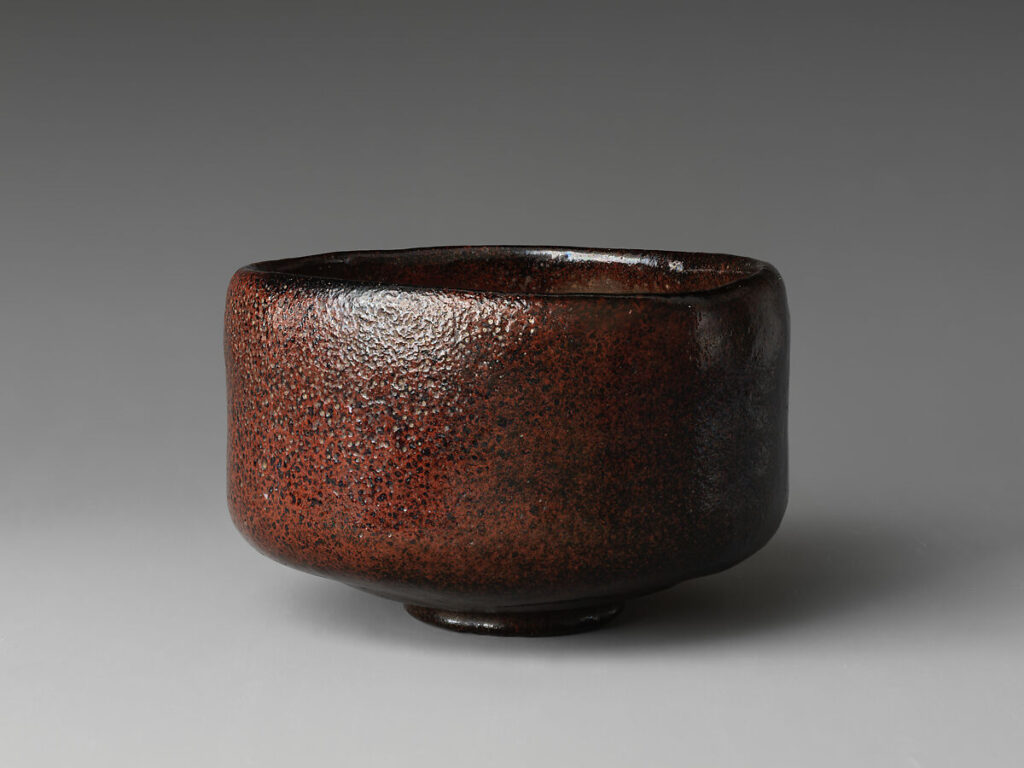
Aka-raku (赤楽), red raku, uses local iron-bearing clay under a clear or lightly tinted lead glaze, fired at a lower temperature, producing a warmer reddish-brown tone generally read as slightly less formal than black raku, though both remain firmly within the tradition’s restrained palette.
Beyond black and red, later generations — particularly the innovation-minded third-generation Dōnyū — expanded into additional colors, but black and red remain the two forms most associated with the tradition as a whole and with Chōjirō’s original commission specifically.
Built for Tea, Down to the Millimeter
Because Raku ware exists almost exclusively to serve tea practice — unlike every other tradition in this guide, which primarily made storage jars, sake vessels, or everyday tableware before tea culture adopted them — some of its physical details were designed for that single purpose from the outset. Our companion guide to chawan anatomy introduced two features worth revisiting here specifically: chasen-zuri (茶筅摺り), a slight interior swelling positioned exactly where a tea whisk’s motion needs room to move freely, and chadamari (茶溜まり), a shallow depression at the center of the bowl’s interior that collects the last remaining tea rather than letting it spread thinly across the whole surface. Both are described in some sources as originating specifically with Raku ware’s tea-focused design, later adopted more broadly across other chawan traditions — a detail that underscores how much of Raku’s form followed directly from its function.
Beyond the Kichizaemon Line
While the main Raku family line is the tradition’s best-documented thread, it isn’t the only one. The most significant offshoot is Ōhi ware (大樋焼), founded in Kanazawa by Chōzaemon, a senior disciple of the fourth-generation Ichinyū, who accompanied the fourth head of the Urasenke tea school to Kanazawa and established a kiln there. Though technically derived from Raku technique, Ōhi ware developed its own recognized identity distinct enough that it’s generally referred to by its own name rather than as a Raku sub-variant — currently continuing under its eleventh-generation head. Smaller Kyoto-area kilns working in Raku style, such as the Tanzaku-ya and Shōraku kilns, also exist outside the direct Kichizaemon line, generally without claiming descent from Chōjirō himself.
“Raku” in the West: A Different Thing Wearing the Same Name
Anyone researching Raku ware in English will quickly run into a second, largely unrelated meaning of the word: “raku firing” as practiced by Western studio potters, a popular technique in art schools and hobbyist ceramics that shares a name and a loose historical connection but differs in nearly every practical respect.
The British potter Bernard Leach encountered Japanese raku firing at a gathering in Kyoto in 1911, brought the concept back to England after 1920, and wrote about it in his influential 1940 book A Potter’s Book. The technique that most Western potters now associate with “raku,” however, largely traces to the American ceramicist Paul Soldner, who in the 1950s and 60s began placing hot, freshly fired pieces into containers of combustible material — sawdust, leaves, paper — to trigger dramatic post-firing smoke and reduction effects. Soldner himself later acknowledged that calling this technique “raku” was, in his own words, probably a mistake, made at a time when little was actually known in the West about the traditional Japanese practice.
The practical differences are significant. Traditional Japanese raku is built entirely by hand, never thrown on a wheel; Western raku pieces are very often wheel-thrown. Traditional Japanese raku is cooled in open air after removal from the kiln; Western raku’s signature crackle and smoke-blackened surfaces come specifically from the post-firing reduction chamber Soldner introduced, a step absent from Japanese practice. Traditional Japanese raku restricts itself to black, red, and related earth tones in service of tea ceremony use; Western raku frequently uses bright, vivid glaze colors and treats the unpredictable results as an end in themselves rather than as part of a tea-focused object. None of this makes Western raku illegitimate as its own studio ceramics tradition — but it is, in nearly every meaningful sense, a different practice that happens to share a borrowed name, and the distinction is worth being precise about for exactly the same reason the difference between genuine urushi kintsugi and resin repair kits is worth being precise about.
A Collector’s Guide to Raku
A few practical points worth keeping in mind when evaluating a piece:
A Raku family attribution is a specific, checkable claim, not a general style descriptor. Because “Raku ware” can refer both to work actually produced by the Kichizaemon lineage and, more loosely, to hand-built black-or-red tea bowls made in the broader Raku style by unrelated potters, a piece attributed specifically to a numbered generation of the Raku family carries real weight and deserves the same documentary standard as any other named-maker attribution — a signed tomobako, a clear chain of provenance — rather than resting on stylistic resemblance alone.
Hand-forming leaves different evidence than wheel-throwing. Because no wheel is involved, look for finger and spatula marks rather than throwing rings; their absence on a piece claiming to be genuine tezukune-method Raku is worth a second look.
“Raku-style” and “Raku ware” are not automatically the same claim. A piece can be honestly, skillfully made in the Raku manner — black or red glaze, hand-built, low-fired — by a potter with no connection to the Kichizaemon line or its recognized offshoots like Ōhi ware, and that’s a legitimate object in its own right. It should simply be described as what it is, the same way a piece described as “in the style of” a named maker is a different claim than a piece attributed to that maker directly.
If a listing or seller uses “raku” to describe bright, smoke-crackled Western-style studio ceramics, that’s a different tradition entirely, however striking the piece might be — worth knowing so the two aren’t confused when researching or comparing prices.
Why Raku Rewards Attention to Origin
Nearly everything else in this guide asks you to read an object’s material history: its clay, its firing, the years it’s absorbed since leaving the kiln. Raku ware asks something slightly different — to read an object’s commission history. It exists because one particular tea master wanted one particular kind of bowl badly enough to have it invented, and because one particular family has spent over four centuries answering that request, one generation at a time. Very little in ceramics anywhere carries a founding intention this specific, or has kept faith with it this long.
About HOJO Japanese Ceramic
HOJO Japanese Ceramics is based in Tobe Town, Ehime Prefecture, one of Japan’s historic pottery regions.
We research, curate, and share authentic Japanese ceramics with collectors around the world.
Explore our curated collection in the HOJO Etsy Shop.