The Six Ancient Kilns of Japan
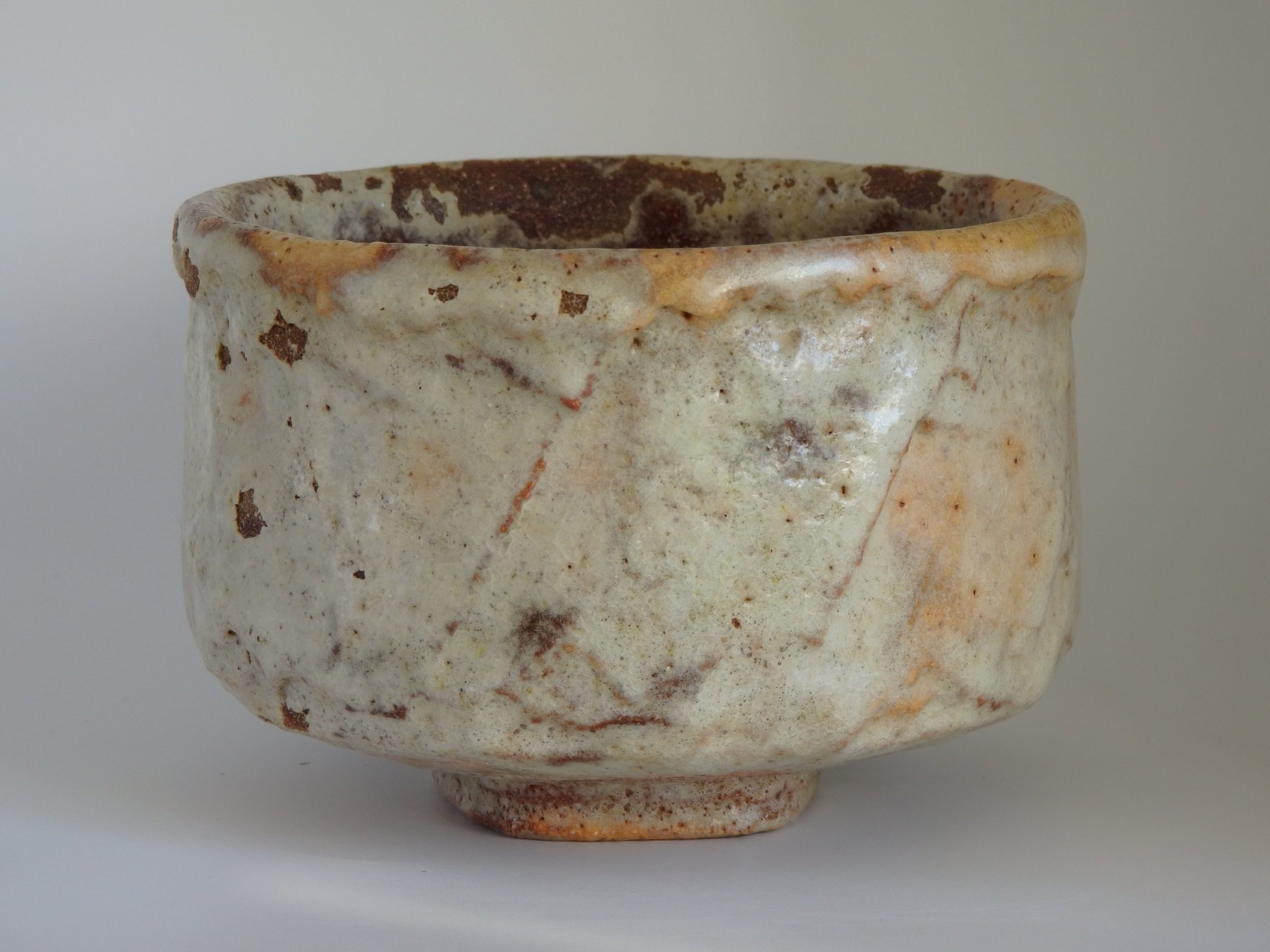
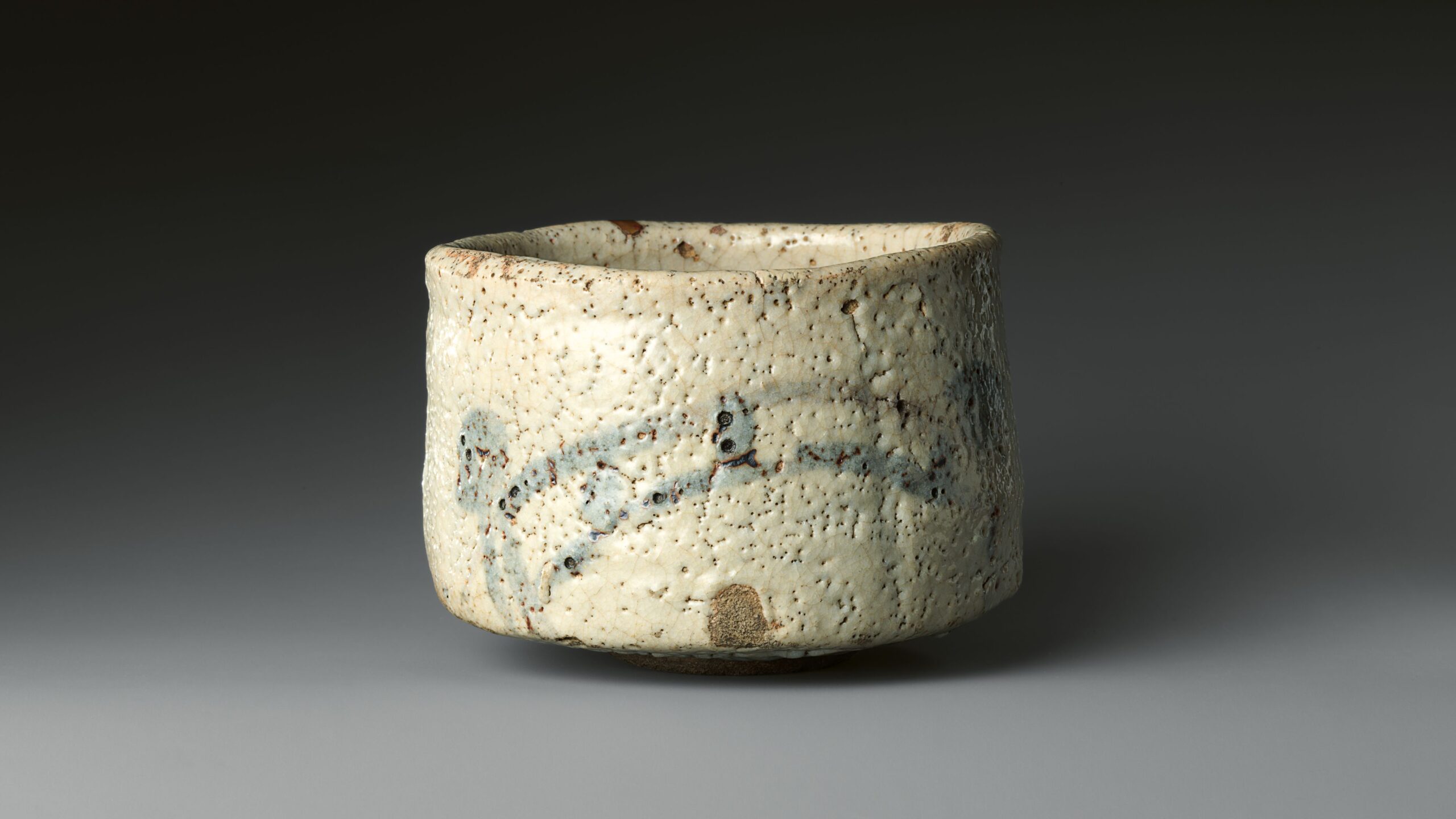
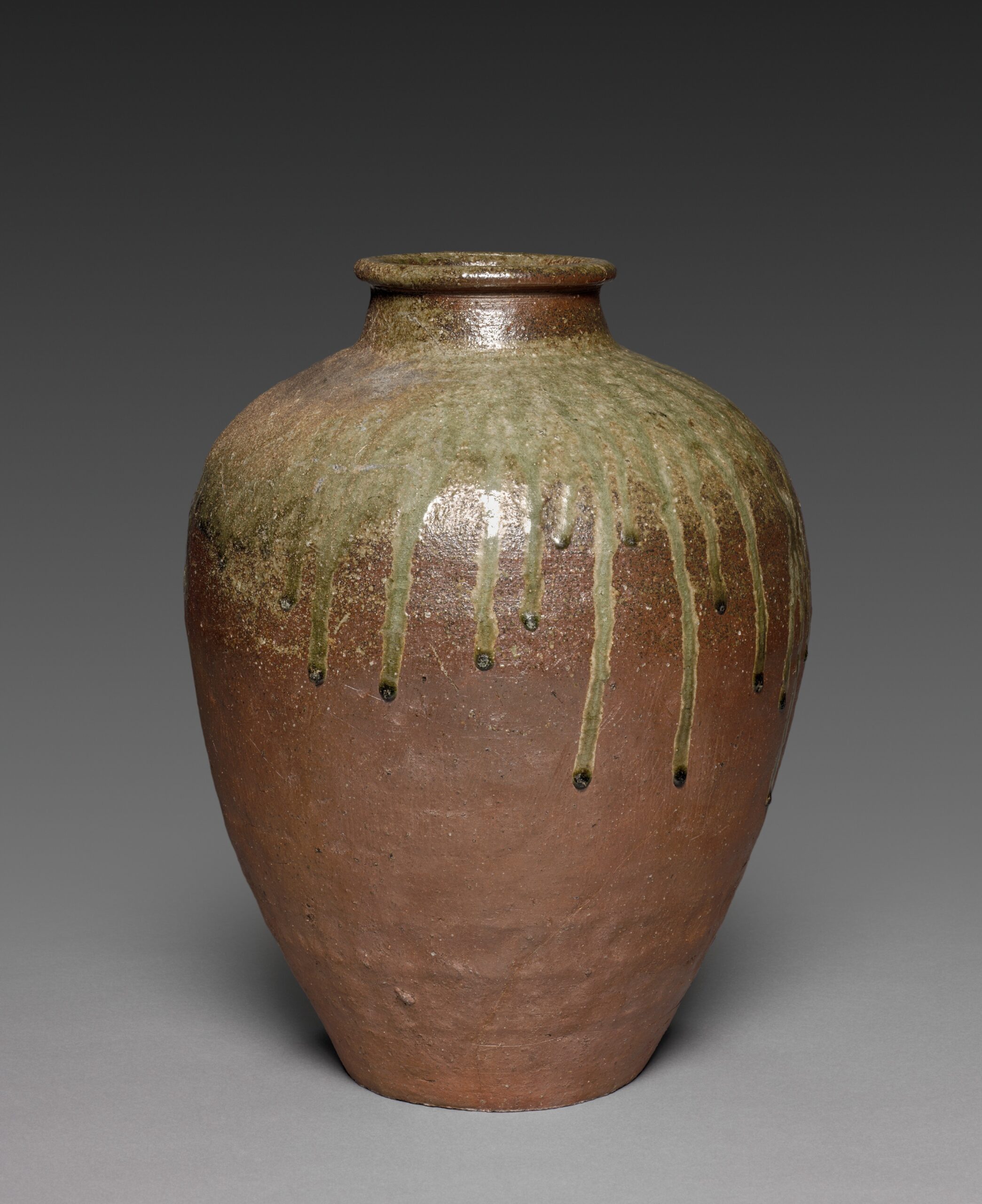
Before looking at the sixteen regions individually, it helps to understand a term that keeps recurring in Japanese ceramic history: the Six Ancient Kilns (Nihon Rokkoyō, 日本六古窯). The name refers to Bizen, Shigaraki, Seto, Echizen, Tokoname, and Tamba — six production centers whose kilns have operated continuously since the medieval period, roughly the twelfth and thirteenth centuries, without the kind of extended interruption that ended production elsewhere. The term itself is relatively modern: it was coined in 1948 by the ceramics historian Koyama Fujio, who used it to group these six sites together as the clearest surviving link between Japan’s medieval pottery industry and its present one. In 2017, the Japanese government recognized the Six Ancient Kilns collectively as a Japan Heritage site.
What unites them is not a shared visual style — Bizen’s unglazed earth tones have almost nothing in common with Tokoname’s polished red teapots — but a shared production logic: high-fired stoneware, often unglazed or finished only with natural ash glaze, made from clay dug locally and shaped by potters working within a regional tradition passed down through families and workshops rather than invented from scratch. Four of the six (Bizen, Shigaraki, Tamba, and Echizen) lean toward the rustic, wabi-sabi end of Japanese ceramics; Seto and Tokoname, by contrast, developed glazing and refinement early enough to become the most commercially dominant of the group, so much so that “setomono,” literally “Seto things,” became the everyday Japanese word for ceramics in general.
Understanding these six first makes the wider landscape of Japanese pottery easier to read, since several of the regions covered below either grew directly out of one of these traditions or defined themselves partly in contrast to it.
The Major Traditional Pottery Regions
Arita Ware (有田焼)
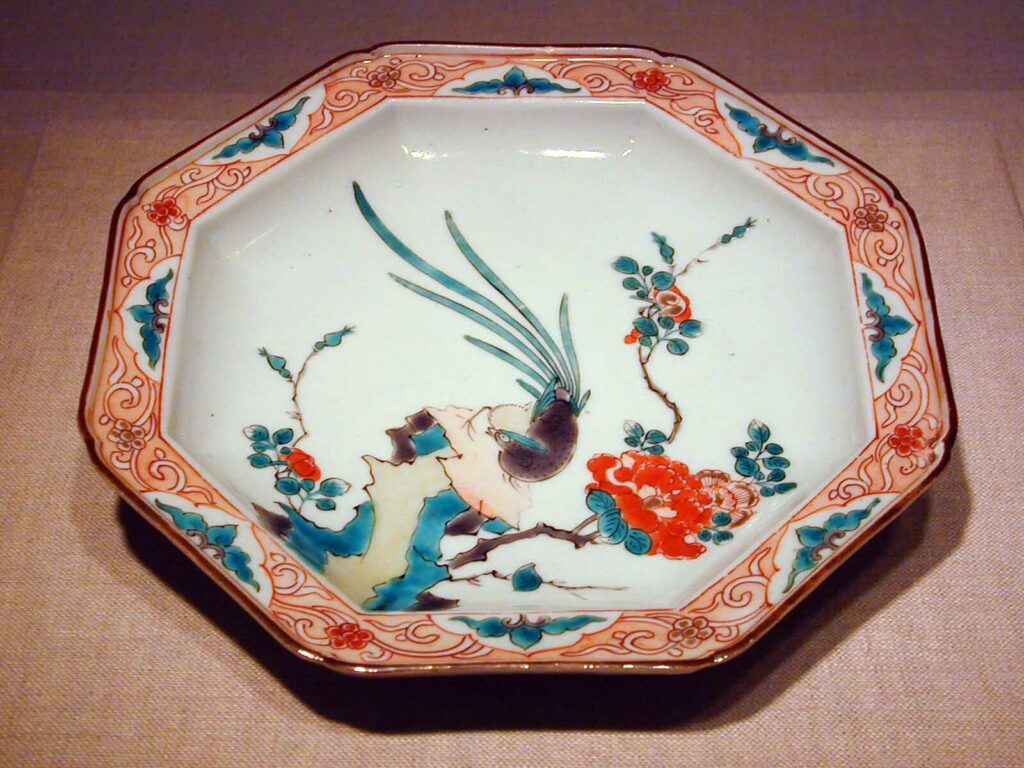
Arita, in Saga Prefecture, holds a specific distinction: it was the birthplace of porcelain in Japan. Before the early seventeenth century, Japanese ceramics were entirely stoneware and earthenware. That changed around 1616, when a Korean potter working in the area, traditionally identified as Ri Sanpei (Yi Sam-pyeong), located deposits of kaolin-rich stone suitable for true porcelain. Within decades, Arita had become the center of an export industry that shipped porcelain to Europe through the Dutch East India Company via the nearby port of Imari — which is why Arita porcelain is still sometimes called Imari ware abroad, after its point of departure rather than its point of origin.
Arita porcelain divides broadly into three visual traditions: the gorgeous red-and-gold Ko-Imari style, the asymmetrical, milky-white-ground Kakiemon style associated with the Kakiemon family workshop, and the more restrained Nabeshima style, originally produced exclusively for the ruling domain. Long-established workshops such as the Kakiemon kiln, the Imaemon kiln, and the Gen-emon kiln (founded in 1753) continue to produce hand-painted porcelain using techniques with a documented lineage stretching back centuries. For collectors, Arita offers something relatively rare in Japanese ceramics: a body of work precise enough in its attribution and export history to be cross-referenced against European collections and auction records.
Read our complete guide to Arita Ware →
Seto Ware (瀬戸焼)
Seto, in Aichi Prefecture, is one of the Six Ancient Kilns, and arguably the most influential of the six in terms of sheer reach. Production is traditionally said to have been established in the 1220s by a potter later deified as Kato Shirozaemon, who is credited with bringing Chinese-influenced glazing techniques back to Japan — a founding story that later scholarship treats as partly legendary, though the historical record confirms Seto was producing high-quality glazed ceramics earlier than most other regions. What is not in dispute is Seto’s commercial dominance: by the Edo period, the town’s output was so central to Japanese ceramic life that “setomono” became the generic word for pottery across the entire country, a linguistic fingerprint no other kiln left behind.
Because Seto’s history spans nearly eight centuries and moved through celadon, ash glaze, iron glaze, and eventually porcelain production, it resists a single defining look the way Bizen or Hagi does. Its Momoyama-period innovations (Kiseto, Setoguro, and forms later associated with Mino) fed directly into the tea ceremony aesthetic that shaped so much of Japanese ceramics afterward. Typical Seto products range from everyday glazed tableware to fine tea utensils. Collectors value Seto less for a single signature style than for its role as the connective tissue of Japanese ceramic history — a region whose techniques quietly seeded developments credited to other kilns.
Read our complete guide to Seto Ware →
Tokoname Ware (常滑焼)
Tokoname sits on the Chita Peninsula in Aichi Prefecture and is, by production volume, the largest of the Six Ancient Kilns, with a documented history reaching back to the late Heian period. For most of that history, Tokoname was known for large unglazed storage jars, taking advantage of coastal shipping routes to distribute them across Japan. Its modern reputation rests on something smaller and more intimate: the shudei kyusu, an unglazed red-clay teapot made from Tokoname’s naturally iron-rich clay.
The iron content is not merely decorative. Tea drinkers have long held that Tokoname’s red clay softens the bitterness and astringency of green tea, which is part of why the kyusu remains the region’s defining product even as its industrial-era output (drainage pipes, tiles, maneki-neko figurines) has faded from prominence. Yamada Jōzan III, designated a Living National Treasure in 1998 for his teapot work, represents the modern high point of this tradition, and his family kiln continues under his successor. Collectors interested in function as much as form tend to gravitate toward Tokoname, since a well-made kyusu is judged as much by how it pours and how it treats the tea as by how it looks on a shelf.
Read our complete guide to Tokoname Ware →
Echizen Ware (越前焼)
Echizen ware, from Fukui Prefecture on the Sea of Japan coast, is one of the Six Ancient Kilns and among the most stripped-down in aesthetic terms. Production is thought to date to the late Heian period, and for most of its history Echizen made almost exclusively utilitarian objects — storage jars, mortars, and large vessels for households and temples along the coast — rather than the tea-ceremony wares that brought other kilns wider fame.
That utilitarian origin is exactly what defines the Echizen look: unglazed stoneware fired at high temperature, its surface shaped entirely by natural ash glaze that falls and melts during long firings in a climbing kiln. There is no applied decoration to speak of, no hand-painted motif competing for attention. What a collector is looking at is essentially the direct record of a firing — the color shifts from grey-brown to reddish-brown, and the texture ranges from smooth to heavily pitted, depending entirely on where a piece sat in the kiln. After a long decline, the tradition was deliberately revived with the establishment of the Echizen Ceramics Village in 1970, which brought a new generation of potters back to the region. Echizen appeals to collectors drawn to the rustic, unornamented end of wabi-sabi aesthetics — objects that make no attempt to look like anything other than fired earth.
Read our complete guide to Echizen Ware →
Kutani Ware (九谷焼)
Kutani ware, from the Kaga region of Ishikawa Prefecture, is Japanese ceramics at its most painterly. Where many of the regions in this guide define themselves through restraint, Kutani built its reputation on saturated, confident color. Production began around 1655 under the patronage of the Daishoji domain, using porcelain stone discovered near a gold mine in the Kutani mining village — but the original kiln closed after only about fifty years, for reasons still debated by historians. Ceramics from that brief window are known as Ko-Kutani (“old Kutani”) and are prized for their bold five-color palette. Production resumed roughly a century later, in the early nineteenth century, giving rise to several distinct revival styles, most notably the Yoshidaya style with its four saturated colors and the red-dominant Iidaya style.
The unifying feature across styles is Kutani gosai — the “five Kutani colors” of red, yellow, green, purple, and Prussian blue — applied in dense, confident overglaze patterns of birds, flowers, and landscapes. Tokuda Yasokichi’s family workshop, working in the tradition of vivid saiyu glaze techniques, and long-established houses such as Kutani Bitōen (founded in 1914) represent the range from painterly tradition to studio-refined technique. Collectors drawn to Kutani tend to be responding to color and composition first, history second — this is ceramics that reads as much like painting as pottery.
Read our complete guide to Kutani Ware →
Mino Ware (美濃焼)
Mino ware, from Gifu Prefecture, is in one sense the least visually unified region in this guide and in another sense the most historically important. Mino accounts for roughly half of Japan’s domestic ceramics production today, but its lasting reputation rests on four distinct glaze styles developed during the Momoyama period under the direct influence of the tea ceremony: Shino (a soft, milky white feldspathic glaze, often with pinholes and faint crackling), Oribe (bold copper-green glaze paired with asymmetrical, deliberately irregular forms), Ki-Seto (a yellow ash glaze), and Setoguro (a matte, near-black glaze pulled hot from the kiln to fix its color). For centuries these styles were mistakenly attributed to neighboring Seto, until a 1930 discovery by the potter Arakawa Toyozō, later designated a Living National Treasure, proved through kiln-site excavation that Momoyama-era Shino and Oribe had actually originated in Mino.
That rediscovery reshaped how these styles are understood today. Arakawa’s own reconstructed Shino ware, along with the work of Living National Treasure Katō Takuo in later decades, represents the modern continuation of a Momoyama tea aesthetic that prized irregularity as a deliberate artistic choice rather than a flaw. Typical Mino objects include chawan, mukōzuke (small side dishes for kaiseki cuisine), and other tea-ceremony implements. Collectors value Mino for direct access to the visual language that tea masters like Furuta Oribe helped shape — Oribe’s green glaze and asymmetrical forms remain some of the most recognizable silhouettes in all of Japanese ceramics.
Read our complete guide to Mino Ware →
Bizen Ware (備前焼)
Bizen, in Okayama Prefecture, is one of the Six Ancient Kilns and the clearest expression of a principle that runs through much of Japanese ceramics: beauty achieved by removing rather than adding. Bizen ware uses no glaze at all. Every visual effect on a finished piece — color, texture, pattern — comes entirely from the interaction between the clay’s iron content, the position of the piece inside a wood-fired kiln, and the path of ash and flame during a firing that can run for well over a week.
This produces a specific vocabulary of effects that collectors learn to read: goma (“sesame”), where falling ash melts into small glassy specks on the surface; sangiri (“scattered ash”), where ash and embers create grey-black patches; and hidasuki (“fire cords”), reddish-orange lines left where straw wrapped around a piece burns away during firing. Kaneshige Tōyō, who revived Momoyama-era Bizen techniques in the 1930s and became the first ceramic artist ever designated a Living National Treasure, in 1956, is generally credited with rescuing the tradition from decline; Fujiwara Kei and Yamamoto Tōshū, both later Living National Treasures in their own right, extended his work in different directions. Typical forms include guinomi (sake cups), tokkuri (sake flasks), and chawan. Bizen appeals directly to collectors who value the idea that no two pieces from the same firing can ever be identical — a form of rarity built into the process itself, not manufactured through scarcity.
Read our complete guide to Bizen Ware →
Shigaraki Ware (信楽焼)
Shigaraki, in Shiga Prefecture near Lake Biwa, is one of the Six Ancient Kilns, with production thought to date to the eighth century, when tiles were fired here for a short-lived imperial palace under Emperor Shōmu. Its defining material is a coarse clay containing visible flecks of feldspar and quartz, dug from ancient lakebed deposits — a texture that gives finished pieces a rough, granular surface unlike the smoother clays used elsewhere. During the Momoyama period, tea masters including Sen no Rikyū and Furuta Oribe specifically sought out Shigaraki’s natural, unforced character for water jars and flower vases, treating its rustic imperfection as an aesthetic virtue rather than a limitation.
Fired in a wood-burning kiln without applied glaze, Shigaraki pieces develop a natural ash glaze and a warm reddish-brown to scarlet coloring where the iron in the clay reacts to the flame — a look distinct enough that an entire NHK television drama was named after it. Multi-generational workshops such as the Takahashi Rakusai kiln, active since the mid-nineteenth century, represent the tradition’s continuous studio lineage, alongside independent contemporary potters working directly with wood-fired anagama kilns. Most people outside Japan encounter Shigaraki first through its tanuki (raccoon dog) figurines, a modern, largely decorative offshoot that has little to do with the tea-ceremony wares that built the region’s reputation — worth knowing so the two aren’t confused. Collectors drawn to Shigaraki are usually responding to the same quality tea masters valued five centuries ago: unforced, natural texture.
Read our complete guide to Shigaraki Ware →
Iga Ware (伊賀焼)
Iga ware, from Mie Prefecture, shares clay deposits and geological history with neighboring Shigaraki, and the two traditions are sometimes difficult to tell apart at a glance. What distinguishes Iga at its best is drama: a natural ash glaze effect known as bidoro (“glass,” from the Portuguese vidro), where accumulated wood ash melts into thick, glassy green pools that pull and run down the surface of a piece during firing. Where Shigaraki’s ash effects tend toward subtle warmth, Iga’s can look almost violent — deliberately distorted forms, deep cracks, and dramatic pooling that Momoyama-period tea masters, particularly Furuta Oribe, prized for water jars and flower vases meant to look as though nature itself had shaped them.
Iga’s production history is less continuous than Shigaraki’s, with periods of decline followed by revivals, and it has never developed the same density of internationally documented named workshops. What has stayed consistent is the aesthetic ambition: Iga ware rarely aims for quiet restraint the way Bizen or Echizen does. It aims for visible, sometimes startling evidence of what fire and ash can do to clay. Collectors who find Shigaraki a little too understated often find what they are looking for in Iga instead — the same natural process, pushed further.
Read our complete guide to Iga Ware →
Kyoto Ware (京焼・清水焼)
Kyoto ware, commonly called Kyō-yaki or, more specifically, Kiyomizu-yaki after the district near Kiyomizu Temple where many workshops historically clustered, does not behave like the other regions in this guide. It is not a single clay tradition tied to one geology, but an urban production center where potters trained in many different techniques — porcelain, stoneware, overglaze enamel, celadon — have worked side by side for centuries, each developing individual and often short-lived styles rather than a single house look. This makes Kyoto ware genuinely difficult to define by material or glaze in the way Bizen or Hagi can be defined; what unifies it instead is a shared context, a city that was Japan’s imperial capital for over a thousand years and its center of refined taste for nearly as long.
Historically, figures such as Nonomura Ninsei, credited with perfecting elegant overglaze enamel decoration on ceramics in the seventeenth century, and the multi-talented Ogata Kenzan set the tone for later generations, favoring sophistication and painterly finish over rustic natural effect. Typical Kyoto ware includes fine tea utensils, kaiseki tableware, and decorative pieces, often with delicate, refined painting. For collectors, Kyoto ware rewards attention to individual workshops and painters rather than to the region as a single style — closer to how one might approach a city’s gallery scene than a single kiln tradition.
Read our complete guide to Kyoto Ware →
Tamba Ware (丹波焼・立杭焼)
Tamba ware, from the mountains of Hyōgo Prefecture near Tamba-Sasayama, is one of the Six Ancient Kilns, with production in the Tachikui district documented from at least the twelfth century. Compared to the more internationally recognized Bizen or the festival-famous Shigaraki, Tamba has kept a lower profile — but it occupies a particular place in twentieth-century ceramic history as one of the traditions the mingei (folk craft) movement, led by philosopher Yanagi Sōetsu, held up as a model of what the movement called “the beauty of use”: unpretentious, functional objects made without a signature or artistic pretense, valued for how well they served daily life rather than for who made them.
Fired for roughly sixty hours in a climbing kiln, Tamba pieces develop natural ash glaze effects from pine wood, with the iron and other minerals in the clay reacting with the ash to produce distinctive tones. Unlike Bizen, Tamba has never confined itself to a single defining technique, adapting its output — storage jars, mortars, sake vessels — to whatever each era demanded. Collectors drawn to Tamba are often responding directly to the mingei philosophy itself: functional, honest objects whose beauty was never meant to depend on individual artistic celebrity.
Read our complete guide to Tamba Ware →
Hagi Ware (萩焼)
Hagi ware, from Yamaguchi Prefecture at the western tip of Honshu, holds a particular status in the world of Japanese tea ceremony, traditionally ranked just behind Kyoto’s Raku ware in prestige for chawan. Its origins trace to the aftermath of Toyotomi Hideyoshi’s invasions of Korea in the 1590s, when Korean potters — among them the founder of what became the Miwa family line — were brought to the Hagi domain and began producing tea wares in techniques adapted from their homeland.
Hagi’s clay is soft and relatively porous, covered in a glaze that develops fine surface cracks, called kannyū, over time. As a Hagi chawan is used for tea over years or decades, these cracks slowly absorb trace amounts of matcha and moisture, gradually shifting the bowl’s color and surface character — a transformation known affectionately as “the seven changes of Hagi” (Hagi no nanabake). Few Japanese ceramic traditions build the passage of time so directly into the object’s intended life. The Miwa family kiln, whose tenth and eleventh generations were both designated Living National Treasures, and the Sakakura Shinbei family kiln, now in its fifteenth generation, represent the two most historically documented lines. Collectors drawn to Hagi are usually buying into this idea of a bowl that is not finished when it leaves the kiln, but continues changing in their own hands.
Read our complete guide to Hagi Ware →
Tobe Ware (砥部焼)
Tobe ware, from the town of Tobe in Ehime Prefecture on the island of Shikoku — HOJO’s own home region — is considerably younger than most of the traditions in this guide, with porcelain production formally established in 1777 under the Ōzu domain, after local deposits of a porcelain-grade stone were discovered among the region’s whetstone quarries. Unlike the aristocratic export porcelain of Arita, Tobe developed as everyday ware for ordinary households: thick-walled, sturdy, and built to withstand daily use rather than display.
The visual signature is immediately recognizable — bold, hand-painted cobalt-blue (gosu) motifs, often loose arabesque or botanical patterns, brushed onto a slightly bluish-white porcelain body with a deliberately thick, tactile rim. In the postwar period, the mingei movement, including visits from Yanagi Sōetsu and Bernard Leach, helped reframe Tobe ware’s plain functionality as a folk-craft virtue rather than a limitation, and the potter Tomimoto Kenkichi’s mid-1950s visits encouraged a generation of local kilns toward more considered design. Long-established workshops such as Baizan Kiln and Ryūsen Kiln continue to produce hand-painted tableware using techniques largely unchanged since the Edo period. Typical products include rice bowls, plates, and teapots for daily use rather than display. Collectors who value durability and honest, hand-painted charm over rarefied provenance often find Tobe ware the most approachable entry point into Japanese ceramics.
Read our complete guide to Tobe Ware →
Karatsu Ware (唐津焼)
Karatsu, in Saga Prefecture on the northern coast of Kyushu, occupies a specific place in the traditional ranking of tea-ceremony ceramics: the old saying raku ichi, hagi ni, karatsu san — “Raku first, Hagi second, Karatsu third” — names it as the third most prized ceramic tradition for tea, though many practitioners privately rank it higher. Its origins trace to Korean potters who settled at the foot of Mount Kishidake roughly 450 years ago, bringing kiln and wheel techniques Japan had not previously used at this scale; production accelerated further after Toyotomi Hideyoshi’s Korean campaigns of the 1590s brought additional Korean potters to the region, and Karatsu became an official kiln of the ruling domain during the Edo period.
Old Karatsu ware includes several recognizable strands sharing an iron-rich, reddish-grey clay body: e-garatsu (“picture Karatsu”), decorated with simple brushed iron-oxide motifs under a clear glaze; Chōsen Karatsu (“Korean Karatsu”), pairing a black iron glaze with a runny white ash glaze in bold contrast; and kuro-garatsu (black-glazed). The tradition nearly disappeared after the Meiji period, until Nakazato Tarōemon XII — later designated a Living National Treasure — revived historical techniques, including the tataki paddled-construction method, through direct study of kiln-site shards. His family has served as official potters to the Karatsu domain for roughly four centuries, and the kiln, now led by the fourteenth-generation Nakazato Tarōemon, continues alongside some seventy other active kilns in the area. Karatsu chawan were historically often unsigned, so the old tradition is judged largely on the strength of the object itself rather than a maker’s name — an unusually direct test for newcomers to learn.
Read our complete guide to Karatsu Ware →
Satsuma Ware (薩摩焼)
Satsuma ware, from Kagoshima Prefecture at the southern tip of Kyushu, tells two almost opposite stories under one name. Its origins lie with Korean potters brought to the region by the ruling Shimazu clan following Hideyoshi’s Korean campaigns of the 1590s, who established kilns across several villages within the domain. From that shared beginning, distinct local lineages emerged, and three survive in active production today: the Naeshirogawa kilns, historically centered on black ware and now known mainly for white ware; the Ryūmonji kilns, which have remained centered on black ware, particularly sake and shōchū vessels; and the Tateno kilns, centered on white ware, especially fine tea utensils made for presentation and gift-giving.
The two visual traditions these kilns produce are described as shiromon (“white ware”) and kuromon (“black ware”). Shiromon is a pale, ivory-toned glazed porcelain with a fine surface crackle, historically reserved for the Shimazu domain’s own use and for formal gifts; in the nineteenth century, elaborately gilded and hand-painted shiromon pieces shown at the 1867 Paris Exposition and the 1873 Vienna World’s Fair made “Satsuma” internationally famous — so famous that other regions across Japan, including Kyoto and Yokohama, began producing export ware in the same decorative style under the same name. This matters directly for collectors: work actually made in Kagoshima (hon-Satsuma) should be distinguished from these later regional imitations rather than described under the single umbrella term “Satsuma.” Kuromon, by contrast, is an everyday tradition — iron-rich clay under a dark glaze, most associated with vessels for drinking shōchū, the region’s traditional spirit. Collectors are drawn to Satsuma precisely because it offers two distinct collecting paths, rustic daily ware and refined presentation porcelain, tied to specific, still-traceable kiln lineages.
Read our complete guide to Satsuma Ware →
Tsuboya Ware (壺屋焼)
Tsuboya ware, from Naha in Okinawa Prefecture, sits outside the mainland lineage that connects most of the traditions in this guide. Okinawa was the independent Ryūkyū Kingdom until its annexation by Japan in 1879, and Tsuboya’s ceramic tradition developed through trade contact with China and Southeast Asia as much as with mainland Japan, giving it a visibly different character: bolder, more tropical in motif, and shaped by centuries of maritime exchange rather than tea-ceremony aesthetics.
Tsuboya ware splits into two broad categories. Arayaki (“rough ware”) is unglazed, high-fired stoneware, historically used for large storage jars, including the jars traditionally used to age awamori, Okinawa’s distilled spirit. Jōyaki (“fine ware”) is glazed, more decorative, and includes the vividly colored, often animal-motif pieces — most famously the shīsā guardian lion-dog figures — that outsiders most associate with Okinawan ceramics today. Typical products range from large storage vessels to tableware and decorative figures. For collectors, Tsuboya is valuable precisely because it complicates any simple idea of what “Japanese pottery” means: it is a reminder that the ceramic traditions gathered under that single label span more than one cultural history, not just one archipelago’s worth of regional variation.
Read our complete guide to Tsuboya Ware →
About HOJO Japanese Ceramics
HOJO Japanese Ceramics is based in Tobe Town, Ehime Prefecture, one of Japan’s historic pottery regions.
We research, curate, and share authentic Japanese ceramics with collectors around the world.
Explore our curated collection in the HOJO Etsy Shop.